21 January 2010

Sir Mungus of Anjou and the Eagles


It's no secret to regular readers of bloomingwriter that we are owned by seven amusing cats, the most amusing--and I swear, intelligent--of whom is Mungus. Or, after his little performance yesterday, Sir Mungus of Angou. He celebrated the fact that I brought home some really fine Anjou pears from a local farm market by laying on the bag, nuzzling the pears, and sprawling ON them.

Now, If there was nowhere else in the entire house for him to lay and rest, he would throw a riotous hissy fit worthy of Garfield or Bill-the-Cat if we tried to prevail upon him to lay on the pear bag. I wasn't quick enough to snap him trying to bite one of the pears, but he decided that they were an ideal place to rest. Perhaps they are used for acu-pear-ssure and relieve the weary muscles of hardworking felines.
Did I happen to mention that Mungus is, PEARhaps, a bit of a ham-cat? He also likes to prevent the reading of the newspaper on a regular basis, which given the sad state of the newspaper really isn't a huge loss.

Since this is normally a garden-related blog, here's a gratuitous photo of Yet. Another. Amaryllis. This is the double-flowered Pasadena, quite a handsome thing, and likely as close as I'll ever come to the real Pasadena. Sigh. Sometimes it's hard hanging off the easternly edge of the continent.


This coming weekend marks the kickoff of the 19th annual Sheffield Mills Eagle Watch festival. The festival runs for three consecutive weekends and is a great way for families to spend some quality time in the outdoors, observing some of the many bald eagles that overwinter here. This fellow was sitting in one of the 'eagle trees' located near a poultry farm, likely digesting his breakfast, when I came back from town this morning, and obligingly gave the baleful eagle-glare while I snapped his photo. Over here in my community of Scotts Bay, we have a few eagles that live here yearround (as a few do elsewhere in the Valley, while many go to Cape Breton for the summer/nesting months) but I never, ever get tired of watching eagles. Not ever. They may be our neighbour to the south's national bird, but we love them too.

20 January 2010

Wordless Wednesday: "The bee-loud glade"

19 January 2010

Finally following up with my Foliage Followup


As many other garden bloggers can tell you, our good friend and fellow blogger Pam @Digging came up with the delightful idea for a Foliage Followup to follow Garden Bloggers Bloom Day. Since I was fashionably late with the bloom day post, it only goes without saying that I'd be behind the eightball with this post as well.

Let's start with this splendid leaf, shall we? Oh, what can that be from? Confused? You'll understand in a few minutes.


I don't have a huge number of really interesting-leafed plants indoors, but I did pick out a few that tend to particularly please me. The cyclamens are the best, with their various patterns of green and silver-appliqued leaves and their lacy edges. I like the first photo (top lefthand) because it also caught a bit of rainbow from a crystal snowflake hanging in the window, during a rare episode of sunlight on Sunday. So pleased was I to see sunlight that I spent a good deal of time just playing with the light on leaves, which looked variously like roadmaps or weird chlorophyll landscapes. My other indoor faves include a lovely succulent, several variegated hoyas with a LOT of rosy colour in their foliage, and an intriguing syngonium that came in a container stuffed with three other plant species and pleaded with me to rescue it. Oh, and the coolly dramatic posturing of my Cycad, which I adore for its prehistoric moodiness.


Outside, there's quite a bit more going on. When I created this montage, the program would not cooperate and put the rhododendron leaf photos beside one another. They're on the same shrub, an eight foot tall beast; the leaves that were basking in sunlight had relaxed and were looking almost springlike, while those in shadow were remaining sullenly, chillily rolled up in protest of winter. I know how they feel.

There are only a couple of deciduous trees/shrubs included; one is a fragrant viburnum, I think Burkwood, which has kept a few of its leaves; the other is my small copper beech, which hangs onto its leaves obsessively until spring. The other non-conifer offering isn't foliage, actually, but the flowerheads of Miscanthus 'Huron Sunrise', which I just included because I'm a rebel sometimes.

I've mentioned before that I really love conifers, particularly those with bright, interesting foliage; included here are a few of my favourites. Clockwise, from top righthand corner: Chamaecyparis 'Heatherbun';
bottom right, Thuja 'Rheingold';
bottom left,
Thuja 'Sherwood Frost', with its ivory tips;
second from top left, another ancient, fascinating plant, Thujopsis dolobrata, the only member of the genus Thujopsis.
Centre: One of my favourites just because I like to say its name: Chamaecyparis pisifera 'Plumosa Aurea Nana'.

Now, about that leaf at the top?

This is my answer to my ongoing trouble with hollyhocksp: I bought this sculpture of a hollyhock plant a few years ago, and it stands in the back garden, oblivious to all assaults of weather. It may not be botanically exact, but it doesn't die off from winter rot, or come out pink when it's supposed to be yellow-flowered, or any of the myriad other ways hollyhocks have sought to thwart me. Although I guess the oxidizing of its leaves give new meaning to 'hollyhock leaf rust', don't they?

post written by jodi (bloomingwriter)

17 January 2010

Blast from the (Bloomingwriter Past): Herbal medicine-A peek into Miss Babineau’s garden


Back in 2006, my dear friend and neighbour Ami McKay wrote an amazing, and bestselling, novel, The Birth House, which caught the public's imagination here in Canada, in the US, Britain, and other parts of the world. Set right here in Scotts Bay at the turn of the 20th century, it was translated into at least two other languages and bumped The DaVinci Code out of the #1 spot on the Globe & Mail's bestseller list. It was (and is still) an amazing, enthralling, riveting read, and I was thrilled to watch Ami's success. She's currently in the editing/revising phase for her second novel, for which we're all anxiously awaiting. (no pressure, Ami, really...).

In the summer of 2006, Ami asked if I'd take part in a blog tour that she was hosting. As the goofy garden writer who lives up the hill from her, I thought it would be a great idea to write a bit about the herbs and other plants that would have been used by the community midwife, who in The Birth House is named Marie Babineau. So here, for your Sunday morning reading pleasure, is that post, with the addition of a few photographs (back then we had no highspeed up here in Scotts Bay) The book is still very much available, and I still utterly recommend it: it is one of my favourite novels of all time.


The Acadians who came to what is today Nova Scotia in the years between 1604-1755 brought many of their own plants with them to develop their potager gardens for medicinal, food and other useful plants. These kitchen gardens were usually very precisely laid out in geometric shapes, but include attractive ornamental plants as well as utilitarian species. There are wonderful examples of Acadian potagers at Grand Pre National Historic Site , Annapolis Royal Historic Gardens , and at the Acadian Museum of Southwest Pubnico .

Being of good Acadian stock, Miss Babineau would have grown traditional vegetables including string beans and peas, onions, and root vegetables such as sunroot (Jerusalem artichoke), beets, turnips, carrots and radish. There would be raspberries, gooseberries and currants for drying and making into preserves, and a host of herbs for tending the community’s ailments—wormwood, lovage, sage, lavender, chamomile, catnip, calendula, angelica and dill…Some plants she would have foraged for in the woods and meadows and along the seashores and roadsides; blackberries, chokecherries, sumac, spruce gum, willow and more.

Here’s a panier-basket of plants, a few of them cultivated and but most gleaned from mother Nature’s bounty.

Angelica: Marian Zinck in the lovely book Wildflowers of Nova Scotia, New Brunswick and Prince Edward Island (published by Formac, newly revised and updated in 2006) writes that chewing the root of angelica was formerly thought to ward off witches. More practically, angelica is often candied or made into a cordial.

Red Clover: a lovely plant for hay and to attract bees, it also makes a wonderful tea when the flowers are dried.

Bunchberry: (Cornus canadensis) Also called crackerberry, these attractive wild perennials produce orange-red berries, bland unless cooked.

Curled Dock (Rumex crispus): The root of this often weedy plant have been used to treat skin afflictions

Winterberry (Gaultheria procumbens): both the leaves and brilliant red berries of winterberry taste of wintergreen and are very tasty.

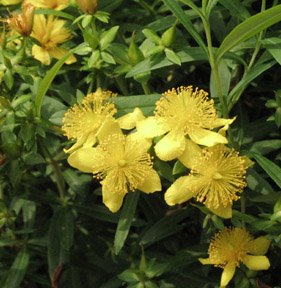
St. John’s Wort (Hypericum punctatum): Once thought to suppress urine output and relieve kidney and bladder problems when made into a tea. Also formerly used as an ointment to ‘dispel hard tumours, caked breasts, bruises, etc.’ Now known to be effective in treating depression and sleep disorders.

Dandelion: Never shun the humble dandelion, also called pissenlit or pissabeds, perhaps for their brilliant yellow colour or for their usefulness as a diuretic. The leaves are a good potherb, the roots roasted and ground are used as a coffee substitute, and of course the flowers make the heady and potent dandelion wine.

Wild roses (Rosa virginiana, R. carolina and others): The ripened fruit, or hips, of wild roses contain much vitamin C and are delicious in jellies, salads or teas.

Dogwood (Cornus alternifolia): the bark of this and other dogwoods was traditionally used by both French and First Nations peoples, mixed with tobacco for lessening that herb’s strength when smoked.

Hawthorns (Crataegus, various species): The small fruits of hawthorns, often referred to as wild medlars (including by Lescarbot at Port Royal in 1609) though sometimes not very flavourful, were known to be of use against scurvy, but also supposedly good to prevent the menses and other ‘fluxes of bloud’ as well as for bladder ailments.

Service Berry, Chuckly Pear (Amelanchier, especially A. canadensis): This large shrub or small tree produces juicy, pear-like fruits about the size of large blueberries, luscious in taste and formerly much used in making preserves, cordials and even a delightful liqueur not unlike cassis.

Mint (Mentha, various species): Mints have long been used in soothing teas as well as in flavouring cooking, bringing ease to a distressed stomach and relief to cough and cold, itching of the skin and various other malaises.

Coltsfoot (Tussilago farfara): Firstflower of spring, its bright yellow, dandelion-like blossoms appear before the thick shiny leaves, which are boiled to make very effective cough syrups and lozenges.


Labrador tea: (Ledum groenlandicum) Although the leaves are bitter, they are often used to make a soothing tea to releeve colds, coughs, and other ailments. Literature reports that a tincture of the plant was useful in relieving the sting of insects, as well as comforting those with rheumatism. Interestingly, the plant has also been used to dye material a brown colour!

Wild cranberry (Vaccinium oxycoccus, V. macrocarpon): One of the most useful wild fruit for preventing or treating scurvy, they were called Atoca by the first Nations peoples who introduced them to the French explorers and settlers.

Cattail: (Typha angustifolia, T. latifolia) An all-purpose and valuable plant, the pollen of which has been used as a flour substitute; the roots are edible, high in starch and sugars and useful in a syrup for fevers, as a poultice on sores and scalds. The fibre has been used in past years to make a type of burlap while the fluff of the flowerheads was often used as a kind of insulation.


Valerian: One of the herbs Miss B’s ancestors would have brought with them from France, and now widely naturalized, it is useful in promoting sleep and in calming nervous conditions. (Funny that Dr. Thomas didn’t use it in conjunction with his recommended vibrator treatments!) Note: The previous aside is an inside joke and you'll just have to read the book in order to appreciate the humour in it.

Willow (Salix species): Willows are the natural source of acetylsalicylic acid, the foundation of painkillers such as aspirin. Chewing the leaves or bark would relieve symptoms of arthritis and other painful conditions.


Glasswort, samphire greens: (Salicornia maritima) This succulent little plant grows on saltmarshes, and is quite edible, but the interesting thing about it is that when burned, its ashes can be used in the soapmaking process. Acadians on the French shore of New Brunswick refer to the plant as titis de souris, or mousetits! (illustration from Wikimedia Commons, as I don't have a good photo of this plant.)
Post written by jodi (bloomingwriter)

15 January 2010

Garden Bloggers Bloom Day: Performances and Promises

There's no shame in being slightly late. After all, on North America I'm in the next-to-latest time zone (Newfoundland is half an hour ahead of us) so it's still late afternoon on the West Coast. Okay, yes, it's tomorrow in Europe and other parts of the world, but at least I'm putting in an appearance for Garden Bloggers' Bloom Day!

There are actually quite a few things in bloom in the house, and several of the poinsettias are still here, despite my threat to put them outdoors for some air with one of their cohorts. In my office, the big bromeliad, some cyclamen, African violets and a couple of kalanchoes are providing me with cheery colour, much appreciated what with the ongoing case of grey skies we've been enduring. A couple of geraniums and amaryllis 'Sydney' are entertaining in the kitchen, while a tired abutilon and small hibiscus provide colourful flowers almost larger than their plants.
What I like as much as the actual blooms is the promise of more to come. That bromeliad I purchased a few weeks back has told me I should get another one, because its geometric flowers are just so pleasing to the eye. Amaryllis 'Pasadena' is going to open in the next couple of days, and suddenly the hyacinths have gotten the growing bit in their teeth and have surged in the past few days.

But the experience I'm most waiting for is growing on an epiphyllum or orchid cactus given to me in the fall by a friend of mine. It DID have quite a few buds until the other night when someone who shall not be named (I'm looking at YOU, Spunky Boomerang) batted at it and knocked it over, severing a few limbs and knocking several of the buds off. However, the rest of the plant is unscathed (and now securely out of reach of curious paddypaws) and the buds are swelling nicely. It's been a few years since I had an orchid cactus, so I can't wait.

Because the past several posts have been photos or very minimal, or else poking absurd fun at myself and plants, I haven't had a chance to really thank everyone who has left such nice comments and wishes on the occasion of 4 years of blogging. I know I promised some older posts and some dialogue on encouraging other bloggers, but deadlines got in the way and one must work if one wants to buy more plants come spring. Those posts will come in the days to follow, but in the meantime, thank you all again. More bouquets of lavender spread around to all.

Post written by jodi

Skywatch Friday: The sun remembers where we are--at nightfall

The weather has been exceedingly dreary of late, thwarting my attempts to bring one of our wonderful skyviews to the conversation of Skywatch Friday. However, I did catch this sunset from my back deck a few days ago during a rare lull in the cloudiness: Enough to remind me that the days are getting longer. Maybe only a couple of minutes a day, but longer nevertheless.

We'll get through winter. We always do, and we're in far better shape even with dreary skies than those in that terribly beleaguered country of Haiti. Godspeed to all who are going to the aid of Haiti and her people.

12 January 2010

But wait, there's more! What to do with your poinsettias in January

It's the same thing every year. We decorate our homes for the Christmas season with garland and bows, greenery and flowers, including the venerable, charming and somewhat cantankerous poinsettia.

Now the tree is down, the decorations put away, and there's nothing left of the Christmas baking except that fruitcake from aunt Shirley that you've been regifted seventeen times in the past five years. And the poinsettias. WHAT should you do with them? They're living plants, after all, they were so lovely during the season, but now, they're getting a little moody, dropping leaves and bracts, feeling the weariness of having been rushed into growth and then subjected to less than ideal conditions for living.

Well, my favourite floral designer and plant buff Neville MacKay gave me an excellent piece of advice back in November, and I put it into play just the other day for one of my plants, that's been needing a bit of a tonic.

Members of the Society for the Prevention of Cruelty to Poinsettias and Other Annoying Christmas Plants (SPCPOACP) might want to avert their eyes now.

"Come January," Neville said breezily, "I just put the poinsettias outside on the deck for some fresh air for a few days. It works every time!"

Yes, yes, it does.

One down. Three more to air out in the next few days.

Bwah ha ha ha ha.

Post written by jodi (bloomingwriter) who is NOT a member of SPCPOACP

11 January 2010

Four years of bloomingwriter's bloomin' rantings


I love flowers, and I love fireworks. Because I'm on deadline, I couldn't spend a lot of time making up some photos to go along with this little post, so I made a popart work out of one of my favourite foliar fireworks, Astrantia. Why fireworks, you ask? It's a celebration. After all, it's not every day that a blog turns 4 years old. In spite of its sometimes frazzled owner, even.

Back in late November and early December, I was musing whether or not to continue blogging, for a whole bunch of reasons. But then I remembered why I started bloomingwriter back in the beginning—as a way of giving back to the gardening community around me, near and far—and how many blessings of friends and wisdom and fun have come to me across the miles.

Unlike some, I haven’t picked up any jobs/clients from doing this, but that wasn’t my intent. I work fulltime as a freelancer, and while it’s sometimes erratic in terms of projects and timely pay, a stint last year in a so called ‘real’ job convinced me that I’m meant to continue on as a freelancer.

Here’s part of what I wrote in my first post, four years ago today:

Words are a lot like seeds from flowers, grasses or trees. They get cast out onto the winds, or in this case, the Web, and we never know where they will end up or how they will fare. Some may tumble onto fallow ground, in which case they fail to germinate. Others land on fertile, prepared land, where they may flourish and bloom. Of course, not every word or every seed planted will prove to be a stunning rose. Some may be weeds. But that's one of the reasons that I connect gardening to writing, and writing to gardening. Both are facets of who I am, not something I just do. And while not every sentence I write is a rose of perfection, hopefully there aren't too many weeds.


The blogosphere, and indeed my own gardening and writing world, have changed dramatically since January of 2006. I was on dialup back then, and it wasn’t until a year or so later that a local company invested in our small community and ran in highspeed internet: not only highspeed, but wireless highspeed. Whoo hoo! It took another year or so to get some glitches worked out, and the company further invested in new equipment to make things work brilliantly. Suddenly, I could post more photos, read more blogs, explore and increase my gardening knowledge dramatically. So thanks, Steve and the gang at Cross Country Television. You’re made of awesome.

Over this week I’ll be putting up a couple of posts from the past, and also I want to float a discussion with readers about encouraging others in this garden-blogging community. That’s a talk for another day, however. For now, I just want to give huge bouquets of thanks to all of you who take the time to read, to comment, to link back, to otherwise be supportive of a fellow blogger. You’re also all made of awesome. Bouquets of lavender to y'all.


Post written by jodi (bloomingwriter)

10 January 2010

By Poppy-ular Demand: Blue poppies, the garden diva


My love affair with the elusive, challenging, maddening but oh-so-exqusite blue poppy began more than a decade ago, when I first started seeing them regularly in gardening magazines. One magazine featured the graceful flowers on the cover, and I think I still have it here, buried somewhere in the piles of magazines that live in my storage office. How could anything be that blue and be a flower? I just knew that one day, I’d have to try my hand at growing them.

Well, as many of you know…I do okay with them. Not great (no waving vistas of dozens of meconopsis here) but well enough that they're sort of a signature plant for me. There have been challenges, that’s for sure, as I wrote in the incredibly sad and all too true tale of woe to do with ducks and blue poppies. But this post isn’t so much about my own experiences with them as an information piece for others. I’m not an expert. The genus IS quite complex. But I’ll share what I’ve learned, and hope it helps others determine whether or not they can grow these marvelous, seductive bloomers. And I'll always cheer on and celebrate others who succeed with these bratty bloomers.

The genus Meconopsis is in the family Papaveraceae, but the plants we refer to as blue poppies aren’t actually poppies at all (poppies being Papaver genus, where there are no true-blue flowers). Now, we can go into all the botany, but I sense eyes glazing over, so instead I’ll refer you to the Meconopsis website where you can learn more about the differences between Papaver, Meconopsis and other members of the same family.


Not all Meconopsis are blue, either. M. cambrica, which I’ve never grown, is yellow-flowered, occasionally orange; several have lavender to purple blossoms, others come in red, rose, yellow or white, and even the blues come in a variety of hues. I’ve had M. b. ‘Hensol Violet’ before, but it apparently didn’t like growing for us because it didn’t return. Or perhaps it was monocarpic. More botany coming along now, so deep breath, and look at this lovely flower before we proceed. Ready?


Monocarpic plants flower only once in their lifetime, though they may live for a few years before they get around to flowering (and dying). Some have evergreen foliage, others are deciduous, and most of the monocarpic species aren’t usually seen for sale, at least around here. That being said…the perennial forms do sometimes behave in a monocarpic way. I sometimes think that these plants are related to cats, and do things just because they can. With the perennial forms, some set seed, and others are sterile. And sometimes if pollination is off, even the fertile types don’t set good seed. Whew! Are we confused yet? Let’s look at another flower….

Don’t worry, there’s not a test…but are you seeing why the genus is at once loved at the same time as many gardeners are intimidated by them? It’s a confusing group of plants, but we love them in spite of their moodiness. Just as we love certain naughty, moody felines.

Experts estimate the number of species of Meconopsis as between 40 and 50, but most of what we find in nurseries are interspecies hybrids. And we all know how much information many labels give, and how plants can get mislabeled. Often M. betonicifolia is labeled as M. grandis, maybe because it’s easier to spell and say ‘grandis.’ For the most part, the species and named hybrids we DO see in these parts are:
M. betonicifolia
M. grandis
M. nepaulensis
(monocarpic, with red or yellow flowers rather than blue)
M. X sheldonii
M. ‘Lingholm’
M. simplicifolia
M. ‘Hensol Violet’

The reason that Meconopsis do reasonably well for me here is that foggy, wet, cool, (although sometimes annoyingly windy) climate of ours suits them well. They don’t like heat, either when they’re germinating or when they’re growing. Ours are situated in the shade bed near, believe it or not, a line of spruce trees. They don’t get much sun, and they’re in a spot that’s a bit higher than much of the bed, because while they’lll take cold, they resent having their crowns get too wet. Meconopsis has a reputation for being a heavy feeder, and each spring the area where ours are gets a good dose of seaweed fertilizer, some composted manure, and some mushroom compost from an organic producer. In late fall, I throw a few evergreen boughs over them, or some hay, to catch and hold the snow and also to prevent the freeze-thaw cycles.

I haven’t grown any from seed for a few years, ever since the great duck fiasco. Although I grew mine indoors (in our not too hot living room), apparently the best way to grow them is to wintersow them. The best success comes with fresh seed, so hopefully if seed has been foil packaged and stored properly, it will be viable. But with these little monsters, you can seed 500 cells, get maybe 200 seedlings…and have 25 or so survive. They are just crotchety! One valuable tip is to grow the young seedlings on in a coldframe for a year rather than plant them out when they’re tiny, flimsy things.

We currently have four or five plants, most with multiple sections to their crowns. They come and go; sometimes one or two will just arbitrarily up and die, usually over winter, probably because of just one too many freeze-thaw or soggy sessions. I don’t keep track of losses, but I do usually tuck another plant in each year—if I can find ‘Hensol Violet’ again this year, I’ll try it again.

The problem is, some nurseries have almost as much challenge with keeping the plants looking good as some gardeners do. The best plants I’ve seen were at Bayport, (because Dick Steele could grow anything anywhere, including the Antarctic or a desert) and at another nursery on the south shore that had a nice shady lath house for its shade-loving plants. We’re a long way from having the waves of blue flowers that you see in some places, such as in Les Jardins de Metis in Reford, Quebec…but we’re a work in progress.

If your climate is hot and muggy, or hot and dry…you’re probably out of luck with these dizzyingly lovely but cantankerous plants. But if there’s a nursery nearby selling them, and they’re not too expensive, and you can give them a cool, shady site with ample moisture and organic matter…well, what the heck, give it a try. They can surprise you…and the efforts are definitely worth it!


written by Jodi (Bloomingwriter)

09 January 2010

No makin fun of my ass: Jenny & Leggo

People often ask me why I don't have trouble with deer in the garden. Or, for that matter, with coyotes. We live in a very rural location, with open fields and woodlands all around us, and there are plenty of both deer and coyotes around. But we have our own built-in critter repellent in the form of our attack donkey, JennyManyAnyLumps, and her horse, Leggo-My-Eggo.

Jenny, it has to be said, is neither smart nor beautiful. In fact, she may possibly have donkey-Alzheimers, as she often forgets where the heck she's going, even from barn to paddock--a distance of maybe fifty feet. In her defence, she's somewhere around 30 years old; she was about twenty when we got her a decade ago to keep my then very young horse company. Leggo is a purebred Morgan, and horses being sociable herd animals, he didn't appreciate being an only child when we brought him from the large stable where he'd been boarded by previous owner. So we looked around, and our farrier told us about a donkey who needed a good home, and we brought Jenny home to be Leggo's buddy.


It was love at first sight. They are devoted to each other, and neither of it likes it when I take Leggo away for a ride. Jenny stands in the barn or paddock and makes desperate sounds resembling a bellows crossed with a foghorn. However, when they're together, Leggo tends to bug her, playing 'herd the donkey' on a daily basis.

Despite her age, somewhat-stunnedness, and exasperation temperament (she moves on Donkey Standard Time, which means when she feels like it, quite annoying if you're trying to get her somewhere in a hurry) Jenny is awesome at coyote and deer detection and repelling. I don't know if she thinks deer are just longlegged coyotes, but she snorts and honks and stamps at them, and she would kick the stuffing out of any coyote foolish enough to try her on. She unfortunately doesn't discriminate between coyotes and golden retrievers, Weimerauners, and even cats, so visiting relatives and friends know not to bring their dogs beyond the fence. Leggo doesn't mind, but in Jenny's mind, they're all coyotes. Our two senior cats who do go out give her a wide berth, and in the barn, she's no problem at all with them.
...when that gets boring, he just goes into flight around the pasture. Watching him gallop, buck, and have a blast gives me great delight.

Leggo likes to play with me too; we play a complex game of tag called 'Fierce Wild Horse' in which I chase him around the pasture, he gallops and bucks and snorts like a dragon, and then comes bouncing back to me if I don't get to where he's paused quickly enough to suit him. He LOVES this game, and gives me the eye hopefully whenever I come out to the pasture to visit.

Jenny looks like she was created by Salvadore Dali, with her funny neck. When we got her, she was living with a bunch of cattle, which were fed grain daily. Jenny liked to clean up the feed after them, and donkeys very curiously don't gain weight all over, but in pads and certain spots, including their toplines or crests of their necks. When the crest gets too heavy, it simply falls over. It's solid, and it doesn't hurt her, and even though she's quite svelte compared to how she was when we got her, it will never go back to its original shape. However, most of us can sympathize with her.

It doesn't affect her agility; she rolls daily, several times usually, and she gallumphs around the field when the spirit moves her to. The past few days, there's too much ice in the field under just a bit of snow, so Jenny and Leggo are both in the barn for their own safety.

Like me, however, they tolerate winter because they know that eventually, spring and summer will come, and they'll have plenty of days to bask in the sun and nibble pasture. They have a good life. Leggo is mostly a pasture potato these days with my knees like they are, but he enjoys a regular game of fierce wild horse, and he's well loved, so it's all good.

08 January 2010

My first foray into Skywatch

The wonderful participant photos in Skywatch Friday always make me smile and think I should share a photo or two. I'm finally getting around to that today, although my photo is from a different day. This is the lighthouse at Chebucto Head, outside of Halifax, on a brooding, sometimes sunny autumn afternoon. Since the sky lately has been fraught with a bad case of the grey broodiness, I thought this was an appropriate one even if it was from a few weeks ago.

Being a by-the-sea-dweller, I spend a good deal of time looking at the sky and the water--when I can see them, of course. We don't have a lighthouse in Scotts Bay, but we can hear the horns across the Bay from us, and our ancient donkey also sounds like a foghorn when she's hungry or wants to come in.

07 January 2010

A burst of ebullience: Fearless Color Gardens by Keeyla Meadows


Okay, let's get something straight from the beginning, shall we? The name of this book is Fearless Color Gardens. I am a Canadian so I spell colour with a U. In the interest of accuracy, if I refer to Meadows' book I'll spell the word the way she does, but otherwise, it'll be spelled in Canadian. Just so's you all know what's going on when you see Color and Colour. Maybe even in the same sentence. Just humour me, okay? It's one of those quirky things we Canadians (some of us) do.

About a week before Christmas, the latest offering from Timber Press arrived at my door, and I opened the envelope and promptly began to grin. When a book cover makes you grin, chances are you'll be entertained throughout the whole volume. That's certainly been my experience. I hope it will be yours as well.

We all respond to colour in myriad ways, and we each have our favourite colours, in our homes, in our wardrobes, in our gardens. My own garden tends toward brilliant, jewellike colours, calmed in places by cooling white or just by the softness of green foliage. The garden is a place to play with colour, and if something doesn't work, you can change it next year, or in the next container planting, or by adding something that ties themes together better for you.

There are a lot of books out there about colour in the garden. Two of my favourites are both by English writers; Color for Adventurous Gardeners by the late and marvelous Christopher Lloyd, and The Bold and Brilliant Garden by equally marvelous Sarah Raven.

To those authors I now add Keeyla Meadows and Fearless Color Gardens. Meadows has written a wonderfully approachable, user-friendly look at creating a brilliant, fun and lively garden, using plants as well as hardscaping, containers, sculptures, found art. While I think some of her paintings and sculptures wouldn't work in a soggy foggy climate such as ours (they somehow seem best suited to a sun drenched and warm climate) I love her sense of colour and unfailing joy and desire to play.

But it's not all a random hodgepodge of colour thrown higglety pigglety, because that just results in a muddiness. Meadows has created a colour triangle, rather than a colour wheel, that to my mind works perfectly because you can't help but remember the three apices, or corner points/primary colours, and then the secondary shades (contrasting and harmonizing) that come along when the primaries are mixed. Especially fun is the photo of her colour triangle, composed of flower blossoms.

Meadows provides worksheets throughout the book, which she suggests readers photocopy and keep several copies of in a garden journal. She also has many "Try This" suggestions which are practical questions and recommendations about working with colour in your garden. Her overall tone is fun and encouraging, never didactic or "thou shalt not"; even when she has suggestions about how to make something look better, she doesn't resort to the sort of high-faluting snobby tone seen in some of the more hoity-hort (tm my friend Sonia Day in her fun new book Middle Aged Spread) type garden writers out there.

In short, Meadows is a cheerleader for gardens full of colour, and of gardeners unafraid to push their boundaries.

Just my kind of gardener and writer.

05 January 2010

Blue, blue, my world is blue...


After playing with David Perry's exercise in Red, Green and Blue last week, I spent some time looking through my photos for another post. It struck me, not for the first time, that I truly am very fond of blue. Not just of blue poppies, either, though they definitely do make my heart happy.

Blue is a soothing, cooling colour, both in the home and in the garden. Some call it cold, but I just find it refreshing, eyecatching but not strident. Some shades of blue tend to disappear into shadows unless some contrasting colour is nearby to really show the blues off. And of course, some plants that are called 'blue' are actually purple in colour, or have purple accents: my blue poppies, for example, have a rich purple colour at the centre of their petals when the buds are opening, and Corydalis elata often has purple colouring highlighting its dazzling electric blue flowers.
(Above collage, clockwise from left: lacecap Hydrangea 'Blue Billows'; Eryngium amethystium; Corydalis elata; frost crystals on car windshield; Allium caeruleum; Gentiana septemfida. Centre, Meconopsis grandis )


I'm not one for pastels as a rule, though I tolerate spring flowers in shades of soft pink or yellow. I prefer jewel tones (more on that in a coming post) but love all shades of blue in flowers, from the pale china blue of glory of the snow to the sky blue of baby blue eyes and forget-me-nots to the rich cobalt in anagallis and scilla.
Clockwise from top: Anagallis 'Skylover', blue pimpernel; Allium caeruleum again; Chionodoxa, glory of the snow; Scilla, blue squill; centre Myosotis (forget me nots)

It's not just my floral tastes that are blue today. I spent last evening at the so-called emergency department of our hospital, because of some not-yet-diagnosed problem with one leg. Maybe it's muscle spasms, maybe it's gunk in the knee, but whatever it is has me essentially unable to walk at the moment and in a lot of pain. Mostly today I'm totally irritated at the doctor I encountered last night, who was a dolt; the nurses were fabulous, but when someone can't straighten out their leg completely, trying to put a splint on it and causing more pain isn't my idea of the right treatment. So I'm sort of sulking in the house again today after spending all day yesterday unable to move. I remind myself others have to deal with far worse, and that I'm able to read and write, and that tomorrow, hopefully, will be a better day. Meanwhile, I can read to my heart's content, and Longsuffering Spouse gets to be housekeeper, cook and nursemaid. He's awesome. Just like the colour blue.

Above, clockwise from left: Echinops ritro 'Veitch's Blue', globe thistle; Meconopsis betonicifolia bud; Delphinium 'Blue Bird'; Lindelofia (a member of the borage family, related to forget me nots, anchusa, and pulmonaria); Spring gentian at NSAC rock garden; baby blue eyes; centre photo, bee on Eryngium planum, flat sea holly.


31 December 2009

Foliar Fireworks for Festive Frolicking in the New Year

Continuing with my sort-of-maybe-retrospective on this past year, I thought I'd offer up a celebratory outburst of foliage to bring in the new year. It's no secret that I'm a big fan of foliage colour and texture as a way to keep the garden always lively and interesting. Although most of the plants included in this retrospective are either perennials or deciduous shrubs/trees, I've waxed lyrical about conifers fairly recently. Well, okay, maybe not quite lyrical. But I did jabber happily on about them.

Because we're all getting ready for New Year's levity (well, some of us are, I'm planning on reading a good book!) I put together a couple of collections of foliage favourites from my garden.
Clockwise from top left:
'Coppertina' ninebark: Luminous copper colour in spring, held well through the summer, deepening to burgundy in autumn. I hugely love ninebarks, as I've mentioned before.
'Frosted Violet' Heuchera: This is one of those no-fuss heucheras, seemingly oblivious to the vagaries of a Fundy winter. Where some of the fancier ones, especially in the orange/gold/scarlet spectrum falter, I find the purple and green-purple combinations do just fine.
Copper Beech. I should have planted my copper beech about twenty years before I was born, because it's going to take it a long while to reach any size. But I love looking out my office window at its rich colour all through the year. Beeches are prone to marcescence, or holding onto their leaves through much of the winter, but I enjoy seeing those dry, bronze-paper leaves even in the wildest of snowstorms.
'Autumn Beauty' fern: Oh, I hope this comes through the winter, because it's a beautiful, beautiful thing! I think it will, but I just planted it early this summer, so it hasn't had a year here yet.
Barberry 'Royal Cloak': I'm deeply besotted with barberries as four-season shrubs, and so are the bees. That's a good enough reason for me.
Lamiastrum 'Herman's Pride': I like lamiums and lamiastrums, even though some are inclined to wander a bit too vigourously for small gardens. 'Herman's Pride' forms a polite clump and has no inclinations for world domination.
'Diabolo' ninebark: Rich purple foliage, dainty flowers, cool bark in winter...ninebarks are awesome here. We don't have real hot summers so ours hold their colour very well.
'Chocolate Wings' rodgersia: Everything about this plant pleases me; it's tolerant of wet soil, it has marvelously textured and shaped leaves that are tinted milk-chocolate, its flowers are cool...I think it's underused and underappreciated.
'Blue and Gold' tradescantia: My first alma mater (The Nova Scotia Agricultural College) has blue and gold as its school colours. Enough said.
Centre: 'Bonfire' euphorbia: There will be many bonfires this evening, celebrating in the New Year. This one, however, will be sleeping until spring. I love euphorbias and have a nice collection of them.

Just a few more foliage collections or plants with which to celebrate the variety of plants:
Clockwise from top left:
A host of young conifers from Baldwin Nurseries in Falmouth
Hardy kiwi vine boasting fresh new foliage
'Aztec Gold' veronica with double grape muscari popping up in the middle.
'Black Negligee' black cohosh (Actaea/Cimicifuga) is an allstar all summer long, flowering late in August.
A variety of flower colours and foliage textures celebrate together
'Nugget' ninebark holds its colour fairly well here.
Centre photo: a Japanese painted fern and an all-green hosta brighten up a shady nook.

It's been quite a year for all of us bloggers, better for some than for others. I'm grateful for the friendships made across the miles, for the comments left by others, for the wisdom and humour and photography and tips that are shared around the world. Here's hoping for a peaceful, happy, healthy and prosperous New Year to each of you. See you in 2010!

Search Bloomingwriter

Custom Search