23 February 2006

In Memory Yet Green

Sometimes, being connected to the wired world is not the best thing. I was sitting in a board meeting in downtown Toronto on Saturday morning when my laptop burped to signal an email’s arrival. I looked down, saw the name of my son’s father, (my former husband but always friend) and the subject Requiem. And I knew what the message would say: that his beloved mother had lost her battle with cancer. Or maybe won it, as she is now at peace and pain free.

Tears flowed, to the astonishment of my colleagues. I dashed out to call my former husband, and try to find some words that would be of comfort and support. The memorial service is set for this coming weekend, in a beautiful community on Nova Scotia’s French shore, overlooking the sea. As Pete was there for me and my family when my father died last June, so will I be there for him and his family, including our son. To celebrate the life of a woman who genuinely was just about as close to an angel on earth as I’ve ever met.

On the flight back from Toronto, I mulled over Marilyn’s life and what I could possibly do that would pay honour and love to her memory, and bring some little comfort to those she loved. And then as I sat looking at a gardening catalogue, one with a butterfly on a flower, I knew what to do.

Our gardens here are flung like a child’s blocks around our property, a profusion of colour in various beds and borders. After the death of my much loved cat Nermal 6 years ago, I planted a rose bush in his memory, and buried his ashes underneath it. Then Timothy Findley, the author on whom I wrote my master’s thesis, died. Other cats, other people, friends of friends or family members, each received a plant, generally a hardy rosebush, placed carefully in the garden to honour their memory. For Timothy Findley, the hardy rosebush Franklin; then for his partner, who is very much alive, but who would want to be beside Tiff, Roserie de la Haie. For Tommy tiger the crabby Tabby, my husband’s beloved, obstreperous bobtail, the gloriously fragrant Snow Pavement. For a fellow writer’s cherished cousin Jeanette, the rose Agnes. And on and on. Portulaca for my aunt Joyce, Johhny-jump ups and lupins for my grandmother Chisholm.

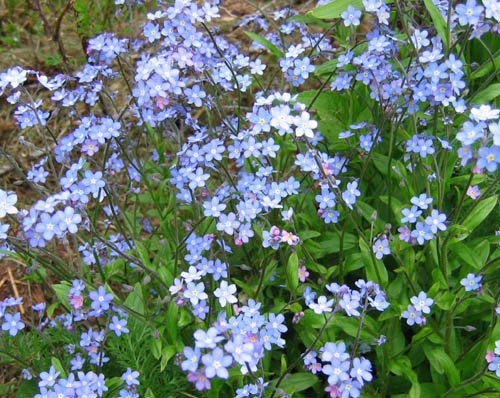
And everywhere, everywhere, forget-me-nots for my father, lost in the fogs of Alzheimers.

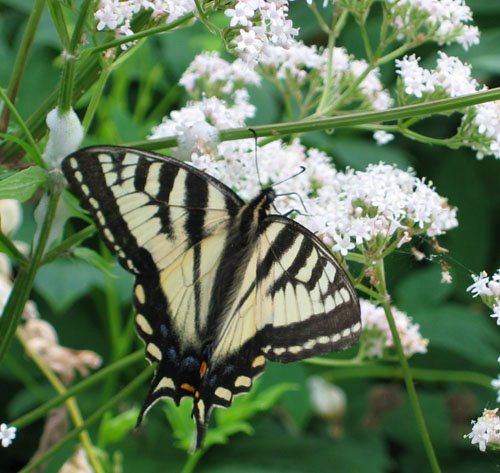
For Marilyn, a butterfly garden, a dedicated bed with plants relating to and attractive to butterflies, because she so loved these ethereal, glorious “flying flowers.” I’ll get some young milkweed from a roadside spot I know, because it’s the favourite food of Monarch butterflies. And there will be at least one butterfly bush, probably several; the delightful yellow one I got last year at Ouestville Perennials, plus a deep purple variety, and perhaps a softer, pink type. I’ll move a chunk of rosy butterfly weed from the big border out back to this new planting, and add some Russian sage, some echinaceas, some of the deep scarlet bergamot bee balm that looks like roosters in the back garden.


A few fragrant annuals, tall nicotiana, purple heliotrope, phlox and stocks and maybe some wallflowers. Grape Hyacinths for next spring, miniature thalia daffodils too, and perhaps a magnolia, depending on where I site the garden—probably out back, looking down at the Bay. Definitely a fragrant, wonderful rose—one of the heritage varieties, after I see what Old Heirloom Roses has available this spring.

And because they’re everywhere, for everyone who has gone before us—more forget-me-nots.


It won’t bring this remarkable, kind woman back, this floral tribute and memory planting. But perhaps it will bring some joy to her family, and further peace into their hearts. In memory yet green…

12 February 2006

A little winter potpourri

A few random thoughts, swirled around by the nor’easter screeching in off the Bay.
Spent Friday night in the company of a diverse and talented group of people; members of the Canadian Nursery Landscape Association from across Canada, gathered together in Halifax for their national awards gala. There were both nursery operators and professional landscapers, sponsors and lifetime achievement award recipients, all of whom are dedicated to making the world we live in a lovelier place.

I’m the first to say I don’t know a whole lot about landscaping as such—I distinguish it from gardening intentionally, although one is part of the other. I tend to think of landscaping as designed and installed by professionals, or at least people with way more talent in design than I have. I’m a gardener—I understand plants, and usually know where they ought to go in my own yard for the best effect. But like this blog entry, our gardens are a hodgepodge, gradually developing some design and form, but not formal like many properties are. A landscape professional could come here, talk to us, look around our land and existing structures and beds, and design an entire yardscape that could include paths, walls, pergolas, water features, and so on—and then, if I had the money, they could create my dream yard for me. I don’t, however, so whatever happens in this yard will be done by my long suffering spouse and me as we can afford it. That doesn’t mean I can’t talk to and learn from landscape professionals around the region, however.

One thing I do know—there’s a significant difference between those professionals, who are trained and certified and understand all aspects of creating a beautiful living space in a yard from soil and slope and drainage and plant needs and positioning…and those happyjack types with a battered half ton truck, a ride on lawnmower and a rake and shovel. Those aren’t landscapers—they’re jobsters who can mow a lawn, throw some seed or fertilizer around, stick a few tired annuals in the ground, and charge someone an arm and a leg for their ‘landscaping skills.’ They cast a bad light on the true professionals, who are passionate about their trade and skilled and will stand behind their work. I’ve committed myself to learning and writing more about professional landscapers, who are also willing to share their knowledge with people like me and with property owners who just want to do a few little projects themselves. It will be interesting learning about something new!

Only a couple of more days now until a very exciting event takes place in Wolfville. No, not Valentine’s Day—that most guilt-laden of Hallmark Holidays—but the launch of Ami McKay’s brilliant new novel, The Birth House. Published by Knopf Canada, and the only title in this tenth year of Knopf’s New Face of Fiction program, The Birth House follows young Dora Rare of Scot’s Bay as she learns the ways of caring for women from the community midwife, Marie Babineau, during the years around the First World War. When Dora takes up the post of midwife following Miss B.’s death, she finds herself in conflict with a know-it-all young doctor who feels his scientific medical procedures are better for women than a natural birth. I’m not going to go any further in describing this novel right now—my review of it is in today’s Halifax Herald, available online for a week—other than to say that in Dora Rare, we have a powerfully drawn female character as memorable as Morag Gunn of The Diviners, (Lawrence) Offred of The Handmaid’s Tale, (Atwood) Mrs. Noyes of Not Wanted on the Voyage, (Findley) or Deanna Wolfe of Prodigal Summer (Kingsolver).


Ami is a wonderful storyteller, and I hope this is the first of many such works we see from this talented young writer. Yes, she’s a friend too, but it is a rule of mine that I do not review books or products that I am not pleased with. And I’m mighty pleased with the book, and proud of Ami.

Right now I’m working on a few gardening articles to get done ahead of time, as all too often, deadlines collide and arrive all at the same time. One of the stories is about keeping a garden journal, and I’m very grateful to gardeners around the province who have shared their tales of garden journaling with me. I’ve got a beautiful new 10 year journal from Lee Valley here, a marvelous thing, although I wish it had pockets or sleeves, like a scrapbook or photo album, so that I could do like one gardener does, and tuck the tags of plants into the book for a permanent record of what I’ve planted (and where!). Getting the journal isn’t the hard thing—remembering to keep it up is. I’ve parked mine right beside my computers so I can write in it daily, or mostly daily.

Gave a talk the other night to the Ladies Auxiliary of the Pereaux Baptist Church, on the gentle art of forcing twigs of shrubs and trees into bloom at this time of year. Now I have the house full of twigs of bittersweet, forsythia, red osier dogwood, spirea…in a couple of weeks there should be some signs of flowers and leaves emerging, to help chase away the gloom of winter. I love watching coaxed twigs (that sounds so much more peaceful than ‘forced’) erupting into bloom like living fireworks. It’s so easy to do, too, providing you follow a few simple rules. Those will have to wait til next time, however.

05 February 2006

If I had a million dollars...I'd have WAY more plants!

In a perfect world, (meaning one with more money and time) I’d do some serious renovating to our house. We’d have a solarium or a conservatory, or a something with lots of glass and room for even more plants than we have now, where I could go when I'm feeling garden deprived in the height of winter's bleakness. I’d also have one office, or an office in one room, not spread out through three rooms and a hallway. My other have would have a heated workshop in the barn where he could create more marvelous garden furniture, birdhouses, and the like. We’d have a hottub outside where we could rest our aching muscles and contemplate the stars or the fog or the snow. And we’d have the gardens looking the way I’d like to see them.

Of all those things, the garden getting where I’d like to see it is the most likely to happen anytime soon. After all, I’m a writer, a freelance one at that, in Atlantic Canada…not a bank manager, a lawyer, a politician, or a highly paid civil servant. But that’s okay, because I’m also independent, and if I want to take three hours off to work in the garden in the middle of the day, and then work at night…it’s just fine.

And with a garden, you can pick up a few plants here, a few plants there…build a pathway this year, a wall the next, a garden room the next. You can’t put a few panes of glass into a solarium room one year, a few more the next. So I’ll work on the garden. Which is what we’ve been doing, of course, since we bought this place.

Right now, like many of us, I’m dreaming my way through magazines and catalogues and websites, looking at plants both new and old that I simply can’t live without. Today’s column in the Halifax Herald includes ten plant genera that I really like and feel are underused; but I have a wishlist of plants that I plan to get this year.

Last year, I bought an Orange Meadowbrite echinacea from a local nursery. It was expensive, and it wasn’t in good shape, but I’ve coveted that plant since first reading about it several years ago, and I had to have it. I hope it pulls through this winter, but if it doesn’t, the nursery has a year-long guarantee on its plants. I’ve returned at most half a dozen plants over the past half dozen years. So there will be no problem if it did succumb to whatever. There are more new echinaceas on the market now, too, in shades of orange, yellow, deep carmine, and even green—or rather, greenish. Probably I’ll add one or two of those, if I can find them locally.

Here are some other plants I intend to have more of:

Heaths and heathers. Blame it on Bunchberry Nurseries; at their open house several years ago, I became utterly besotted with heaths and heathers—not so much for the bloom, which is great, but for the foliage colours. The display gardens around Bunchberry, in Upper Clements near Annapolis Royal, are phenomenal; Jamie Ellison and Jill Covill have collected and propagated some unique and choice specimens over the years, not only of members of the Ericaceaous family of plants, but also of sempervivums and other alpine plants, evergreens both broadleaf and needled, grasses…problem is, I want one of everything and two of some! I’m starting out small, testing the drainage and protection from wind they might need—my friends Ami and Ian McKay have some delectable heathers in their back garden, growing to nice size now, here in our community so hopefully the half dozen I have planted out back will also thrive and grow.

Grasses. Yes, I’ve seen the light where grasses are concerned. And I’m sure, with the mild fall we had, many of you have also gotten the grass bug. Where we had next to no snow or frost leading up to Christmas, plantings of perennial grasses have stayed tall and gorgeous this year. Some of them have also been planted now for three or four or more years and are really getting some size to them too. Last year we put in probably a dozen different grasses, (I’m including sedges in the catchall term grass), including a gorgeous Bromus Skinner’s Gold purchased from Hillendale Perennials near Truro, and both a bronze and leatherleaf sedge from Springvale Nurseries, and several Miscanthus varieties from Blomidon Nurseries. I can’t wait to see how they do this year.

Trees. My friend Paul Grimm of Springvale Nurseries says, “The best time to plant a tree was twenty years ago; the next best time is right now.” Well, I’ll wait for spring, but on my wish list are the Dawn Redwood, Metasequoia glyptostrobioides, which Captain Dick Steele first told me about 4 years back. Also needing to come and live with us are a Japanese Katsura, a Devil’s Walking Stick, (Aralia elata) a couple of lindens and several amelanchiers (shadbush or chuckley pears). This doesn’t include the shrubs that I’m planning to add…I promise a blog entry on shrubs soon.

Foliage Perennials: What I’ll probably avoid are hostas and heucheras, at least til the ones we have now get well established and I see whether I like them where they are. Last year we added about a dozen hostas from various nurseries and fellow gardening enthusiasts, and three heucheras—Obsidian, Lime Rickey, and Marmalade, for a nice colour range. I really like perennials with interesting coloured foliage, including those that flower, but I don’t care if they flower or not if I like the foliage. Last year at the Royal Botanical Gardens in Hamilton, I saw this marvelous Stachys, a softly variegated green and gold variety. I resisted the urge to snip a piece…and it was hard…but now I’ve found someone who both knows what it is and has a couple of plants. So hopefully I’ll get my hands on Stachys byzantina ‘Primrose Heron’ come spring.

Flowering perennials. Oh, where to start? More euphorbias; more verbascums; more campanulas; (different ones, not more of what we already have!) More Oriental poppies; and at least three plants that I’ve never grown before. I’ll let you know what those will be when I figure out for myself.

Bulbs: More lilies, especially fragrant ones, definitely! I need to divide those we have now, which are mostly Asiastics, lovely but scent free. Non-hardy bulbs and tubers I don’t tend to grow a lot of, because of course you’re supposed to lift and store them. Well, I’m away so much in the fall…but Carol Cowan of the Netherland Bulb Information Centre told me over lunch to stop feeling guilty. “You plant annuals and let them die back at summer’s end,” she pointed out. “do the same with your tender bulbs if you want.” Good point, Carol. Maybe this year I’ll do just that.

01 February 2006

Milk comes from a box, carrots come from the store?


Yesterday I stopped at a local farm to buy some chickens. Not live ones; big, tender, wonderful chickens, grown to beyond the tiny size that grocery stores demand of farmers, processed at a local, inspected meat plant. I’ve been buying chickens from this farmer for years. Likewise, we get a quarter of beef from a pair of brothers who farm and also operate a sawmill, honey from a local beekeeper, vegetables and fruits from local farm markets (except for things like oranges and other non-local produce.)

We get excellent quality food, and at an excellent price; in some cases maybe slightly more than you’d pay in a grocery store, but it’s local, and the money is going to the farmer, not to Wal-Mart or Costco or superstore or whatever big box store is gouging farmers these days.

Now, I get very cranky at anyone dissing farmers. I'm not a farmer, and not from a farming family, unless you count the family farm my grandparents had while raising their kids in the thirties and forties. I went to Agricultural College--proud to be an Aggie!-- and I write about farming when I can, even having one of my stories on the family farm nominated for a journalism award. But I'm proud of farmers and protective of them because they are the people who grow the food we eat. Despite the fact that it seems a whole sector of the populace thinks that food just spontaneously generates in supermarkets, prepackaged, prepared, de-nutritionalized and with enough chemicals and additives in it that it should be glow-in-the-dark, nope, that’s not how a carrot is made. A farmer of my acquaintance told me about a visitor to his dairy farm who got QUITE indignant when it was explained to him that milk came from cows. Seems he thought that was obscene, or something. Bet he climbed into his 8 cylinder 451 SUV and stormed off to McDonalds for a Mcburger to calm his nerves.

Why am I talking about this? On a blog mostly dedicated to gardening? Because it’s my blog and I can—but mostly, because I really, really care about the welfare of our farms and our rural, farming communities. Because of something I read just the other day, about the income of farmers in our country. According to the National Farmers Union, in 2005, average farm income, before any sort of government payments, was negative 12,000 per farm. PER farm. Imagine if you worked your guts out day in and day out, paid all your expenses and bills and taxes and more expenses, and at the end of the year had a 12,000 negative income to show for all your labour! Is it any wonder so many of our farmers are discouraged, selling out, working two jobs as well as trying to farm?

Why is this happening? There are many reasons, but right here, I put a lot of the blame on the supermarkets. Never mind that one of them is based in Atlantic Canada and brags about how it buys local products. “Local” can mean up to 24 hours trucking time away, apparently. But the real deal is this: although the price of everything, from seed to fuel to fertilizer to feed to tractors to plastic bags for bagging crops, has gone up drastically—fuel prices alone about 30 percent in the past year—the farmer is not getting any better prices for the food they produce. Oh, the price of food is going up all the time in the stores—blaming it on the high cost of trucking, partly—but that extra money isn’t going to the farmers, but to the middlemen.

So, what do we do to help? Buy local food. Go to your local farmers markets, and to farm roadside stands. Get to know the beef farmer down the road, the beekeeper, the apple grower. Ask them questions. Buy their products. Savour the flavour. That chicken we roasted for supper tonight was delicious, moist, full of flavour, not overly fat, and it’ll last for three or four meals, just like a turkey. And it helped out my neighbour, who in turn buys feed from the local mill, and fertilizer from a local farm supply store, and does his banking at the community credit union…

One of the nicest things I’ve seen a magazine do to help out farmers is the Buy Local Beef Directory that DvL Publishing puts out in its magazines as well as posting online. While not exhaustive, it gives a good number of farmers who sell their own beef, including some organic producers. This directory was born after the BSE crisis of 2003 threatened to destroy many beef farmers in our country. Somehow, many of them have hung on, mostly because they raise other crops or livestock and work off farm as well.

What’s the future for farmers in Atlantic Canada? Unless something changes dramatically, I wonder if we’ll even HAVE any farmers in another twenty years.

I’ll do what I can to spread their message. Support your local farmer. I don’t care if you buy conventional or organic foods, just buy them locally. Get out to your local farmers market or roadside stand. Get to know the farmers who produce your food, and ask them questions. They’re not trying to hide anything. Canada has one of the safest food supplies in the world, and also one of the cheapest. But when the last farm has been turned into a subdivision, and the last farmer’s child has gone to work in a city somewhere, and we’re paying 27.00 a litre for milk coming from China, maybe we’ll realize just how important local farmers were to our economy.

Like the sign says, If you ate today, thank a farmer. Better yet, buy some food from him.

23 January 2006

A herd of cats (not herding cats)

It starts out with just one…then you get another one to keep the first one company. Maybe somewhere along the way you get a female who manages to come into heat before the trip to the vet, and then you have kittens. Before long you have a herd.

Of cats.

That’s sort of what happened with us.

I hasten to add, all our cats are neutered and needled. Most of them are rescues. But we have had kittens in the past, born in my closet, and at one high point we had eighteen cats and kittens living with us—at that time, home being the upper flat of an old farmhouse in another small valley community. It was a bit much…but we found homes for a number of them, got everyone neutered, and then moved to our current and hopefully forever home.

In the nearly seven years since we moved to this old farmhouse, we’ve had cats leave us and cats come to us. We’ve lost two to the road, several to unusual illnesses, one to old age, and had two decide they didn’t want to live here any longer. We’ve rescued kittens that were run over, kittens that were abandoned, kittens that came from feral cat colonies and were being tamed down, and one large cat who fell over at the cat shelter and pledged everlasting love. (Those are especially hard to resist.)

We’re now holding stable at ten cats, or as I sometimes remark, 9 ¾ cats, including Nibbs, our little three-legged one who lost his right back leg after being hit by a car.

Don’t feel sorry for him, though. Our vet told me that cats are born with ‘three legs and a spare’, and Nibbs certainly gets around just fine. In fact, earlier this evening I watched as he chased Spunky Boomerang gleefully through the house in one of their complex games of Tackle Tag and Earwashing. This involves racing through the house at top speed, each other, having a tremendous wrestling match complete with kicking each other, chewing and growling, then abruptly getting tired and washing each others heads instead.

We spend a lot of time watching our cats as they interact with us and with each other. My husband remarked the other day “they don’t seem to have a pecking order, do they?” Curious, I went and looked up some information. While domestic cats aren’t normally a herd animal, they do have social hierarchies and can be very territorial. We can’t figure out if there is an alpha cat in the family—although we do refer to Toby Soprano as “the boss of this here family”, mostly because he’s cute, fluffy and charming, and loves to jump on people and high places.

One article I read suggested that, to ensure peace, order and good government in your feline household, you have one litter box for every cat—in fact, one extra would be a good idea. Whew. Imagine having 11 litterboxes spread around the house! Four of our cats go outside every day, and they do their eliminating out of doors; the rest share the communal litterbox, which is a large tub, formerly used to carry fish in. I clean it daily and there’s usually a highly amusing interlude afterwards where the herd is lined up to do their business, as if the thought of a clean litterbox is just too much for them.

I cannot imagine living without cats, ever. They are so wise, so loyal and loving, and anyone who says they aren’t any of these things knows absolutely nothing about our feline friends. They know things. They know when I’m upset, and the ones I’m most close to will casually hang around, not being obsequious, but just being near and ready to purr and bump and comfort. They ham it up tremendously, putting on great performances that leave us breathless with hilarity at times, even when it’s a case of four of them arriving on the bed with a mouse, and as my husband wrote to me when I was away, “and no one was dead!” We’ve watched them fight with one another, just small snits mostly, and also comfort and play with one another. The rest of the herd is always protective of Nibbs; they will play with him, but when he first came home, they would sleep near him, wash him and seemed to comfort him when he was first adjusting to his tripod method of mobility.

Maybe I’m anthropomorphizing too much here. But that’s what it seems to us from watching them. And they grieve when one of them leaves through death. When Nibbs’ brother Tommytiger was killed after being chased by a raccoon out into the road, Nibbs looked for him for days, crying and coming to me to be comforted. And the strangest thing happened the day we buried Tommytiger. We have two cats who are brothers, Quincy and Mr. Rowdy Retread. They do not like each other, perhaps because they were separated for over a year and forgot that they were littermates, or maybe because Rowdy was late being neutered, or maybe just because, like some siblings, they don’t get along. We were sitting on the back deck, feeling very upset, and Quincy was lying on the deck with us, just being there. Rowdy came parading across the yard with a huge field mouse, fat and sassy on the lush food of early summer. He marched up onto the deck, over to Quincy, and dropped the mouse in front of him. Then he walked away, flopped down on the deck, and started washing himself. Quincy looked at him, looked at the mouse, and I swear he said, “thanks!”—Picked up the mouse and went away under the deck for a snack.

Rowdy climbed up on the chair beside my dearly beloved and purred and bumped. We were speechless with wonder.

My late grandmother DeLong, when she was very old and failing and starting to slip into the fogs of dementia, did not know who I was when I visited her for the last time. However, when I told her I got my love of cats from her, something like a veil lifted from her eyes.

“I was always good to cats, and they was always good to me,” she said with a wise smile. Just for that moment, we connected, and shared a thread of understanding, before that veil dropped again.

I think I should like that to be my epitaph when I’m gone.

17 January 2006

Of seed catalogues and other garden porn

Pssst. C’mere. Yeah, you. Wanna see something hot?

Oooooh, look at the size of those!? Don’t you just want to bury your face in them?

I’ve never seen those that colour before. Gotta get me some of those.

What will my long suffering spouse say? Oh, he’ll understand. He knows about my bad habits.

Yes, the new season of seed and nursery catalogues is upon us.

They are enough to drive even the mildest mannered gardener into throes of ecstasy. Purple carrots. Yellow peonies. Gorgeous evergreens, grasses, perennials, annuals. The almost perfect anodyne for the winter blahs.

They start just before Christmas, at least around our neck of the woods. I don’t get a huge number of catalogues, but I do receive quite a few. Some of them I seldom order from, but use them as a tool to learn more about new plants, new cultivars, growth habits and requirements, and other fun stuff.

After all, I don’t have unlimited funds for the garden, and sometimes there are a few discussions about what my friend Flora’s husband calls “groceries for the garden.” Our garden gets quite a few groceries every year, but I point out to my dearly beloved other half that they are research. After all, I need to know how plants will behave in our garden of clay, rock, wind and fog before I can recommend them to others. To paraphrase Frank Sinatra, “if they can make it here, they can make it anywhere…”

Favourite catalogues include Veseys, which features seeds for cooler, short seasons such as ours; Gardenimport, which showcases beautiful things from around the world; Richters Herbs, who grow the most amazing lavenders among other delights, and Patrick Studio in Quebec.

When looking through plant and seed catalogues isn’t enough to give me a good fix for my garden desires, I turn to books of garden porn. You know the kind I mean, with the sumptuous photographs of plants, gardens, landscapes…But it can’t be all show and no tell. Oh, no. The books that grace our library of gardening information number in the several hundreds, and we have some wonderful books that are certainly eye candy for plant lovers—but they all provide a wealth of knowledge and share information with their readers.

One of my very favourites came out several years ago now. The Jewel Box Garden by Thomas Hobbs follows up on his bestselling Shocking Beauty from several years previous. Hobbs is described as a garden impresario, and while at times he’s a bit didactic, he’s also very funny and encouraging most of the time. Granted, he lives in Lotusland, British Columbia, land of gentle climates, and runs Southlands Nursery, so he’s privy to plenty of exotic plants that we Best coasters can only dream about, or plant in containers. And one of the things he quotes, ‘free your mind, the rest will follow’ is a good mantra to follow when dealing with a garden, or with any other facet of life. It might sound trite, but it’s not. Throwing caution to the winds and trying something because you think it might work well is great. If the plant shapes don’t work or the colours clash, big deal. Dig out one of the offending plants and find another spot. Works for me.

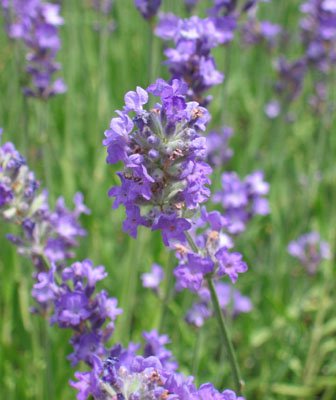
Another delectable book of garden-porn (I wish I knew who first coined that phrase—does anyone know!?) is Clay Perry’s Fantastic Flowers. Open this book, even on a frigid, blustery, storming January day (whatever those look like, I can’t remember…) and you can feel summer’s warm kiss upon your cheeks and hear the bees drunkenly flying from their pollen banquets. And if, like me, you keep a little box of lavender flowers near at hand, that you can run your fingers through and lift scent to your nose, you push back winter a little bit further.


Perry is a brilliant, luscious photographer, and his wife Maggie a lively writer who provides great gardening tips, snippets of history about the plants that Clay has captured in his lens.

This is like a book of Georgia Okeefe paintings, the photographs are so intimate and seductive. It could make an amateur photographer like me throw up her hands in despair—but instead, it inspires me to work even harder at my photography. Which is, of course as much a pleasure as is the writing.

14 January 2006

still life with hyacinth

A writer’s job is to write, correct? Yes…but also to do it well, and with passion. I am passionate about writing, because it’s not just what I do—it’s who I have always been, though it took many years for the still small voice inside of me to drown out the voice of the censor/editor who sits on my shoulder, offering criticisms. That censor has become more of an editor now, a friend rather than a hindrance. But when he does get too critical, I feed him dark chocolate, because he can’t talk with his mouth full.

So I’ve had a writing project on my plate for nearly a year, one that I thought I really, really wanted to do, because it’s a subject that I’ve had interest in ever since the event happened. I had some unique contacts and perspectives, and thought it would be a fun project.

Somewhere along the way, something changed.

I worked on this project while I was at sea with the Canadian Coast Guard last fall. I’ve worked at it sporadically in between writing and seeing the Atlantic Gardener’s Greenbook come into print. But it hasn’t come together, and I didn’t know why.

I’ve written here before that gardeners are a generous lot. So are professional writers, at least the ones I am associated with. I’m particularly fortunate to belong to PWAC, the Professional Writers Association of Canada, a 30 year old organization of non-fiction writers flung across this country. We have several internal, private, mailing lists, including the “L”, which is our virtual watercooler. We discuss losing weight, the pleasures of chocolate, red wine, and cats, the foolishness of politicians, whether Macs are better than PCs (yup, of course!), but also a huge range of topics pertaining to our profession/identity as writers.

A few days ago I had a virtual venting, and sent to the “L” a post about my struggles with this book project. The responses I got were warm, wise, and genuine. The one that stopped me in my tracks went like this, in part:

“Be the Jodi who moves me to tears, not the Jodi who produces inoffensive content to go between the ads. What do you want to be when you grow up? There, right there, just for a second, before you could censor yourself, your bliss went flitting by, but then you said, ‘Oh no. That’s not possible, not responsible, not acceptable.’ Follow your bliss, kiddo. We only go around once. No one lies on their deathbed saying, ‘damn, I wish I’d spent more time at the office.’”

Whew. That moved ME to tears. And caused me to look deeper. For the most part, I AM following my bliss…living where I do, with my dearly beloved husband and our menagerie of animals, writing about the things that I’m passionate about. And I do have some other projects in mind, that will come to fruition when it’s time. Still, even after reading the letters I received from my friends and colleagues, I needed to think deeply and make the decision honestly.

This morning it’s like spring again, unnaturally mild. In my office, it smells like spring. Back in November, I put a large hyacinth bulb into a bright orange forcing glass filled with water, set it on the window, and left it to do its thing. While I was away yesterday, it really opened up, and today, the whole upstairs is awash in this glorious sweet fragrance.


I sat and contemplated this explosion of colour and scent for a while, after rereading the letters about my project. I moved the vase to the window behind my desk, where there’s also a crystal snowflake. When the sun comes up, this room is filled with rainbows of light, which always make me happy. Watching the watery sunlight outside on the gardens, looking around at the icons of identity in my office, I realized it was time to say no.

Far better to write with my heart, which is what I’m known for doing, than do something that is in my head—I could do it well, but it won’t touch people the way I want it to. Monday, I call the publisher and say so. Without guilt, either.

11 January 2006

Why we blog...or plant seeds

Words are a lot like seeds from flowers, grasses or trees. They get cast out onto the winds, or in this case, the Web, and we never know where they will end up or how they will fare. Some may tumble onto fallow ground, in which case they fail to germinate. Others land on fertile, prepared land, where they may flourish and bloom. Of course, not every word or every seed planted will prove to be a stunning rose. Some may be weeds. But that's one of the reasons that I connect gardening to writing, and writing to gardening. Both are facets of who I am, not something I just do. And while not every sentence I write is a rose of perfection, hopefully there aren't too many weeds.

so I'm starting this blog for several reasons. One, to share thoughts about the gardening and natural world around me, and to perhaps extend conversations that get started in some of my writing features and columns. Because if there is one thing I learned very early on about gardeners, they are among the most thoughtful and generous people in the world. We swap seeds, plants, cuttings, information, suggestions, support. I get paid to write about gardening, it's true. But I receive so much from other people's knowledge, enthusiasm, and skills, that this seems a small way of saying thank you to fellow gardeners, whether backyard enthusiasts like myself or professional landscapers, nursery operators, and plant enthusiasts.

Search Bloomingwriter

Custom Search