Showing posts with label books. Show all posts

25 February 2014

Rediscovering (& reimagining) the joy of houseplants

Back when I was a student at the Nova Scotia Agricultural College, my room in residence resembled a miniature jungle. At one point, I had over 100 plants in that room, ranging from tiny lithops (living stones) to sprawling English ivy and philodendrons, to colourful African violets. 
Although I don't have quite so many indoor plants these days, I still have quite a few. There has never been a time since I was in my mid-teens that I haven't had houseplants, and I can't imagine ever NOT having them. They are like cats in that respect--they are part of who I am. 

Often when people come to visit, they admire my plants and tell me how they can't grow indoor plants because they have a black thumb. I don't accept that label, though. As with gardening outdoors, anyone can have great indoor plants. You just need to match your home conditions to the correct plants. 

Happily, two new books have been published to help would-be indoor plant gardeners overcome their fear of failure. 

05 January 2013

A New Year, a new garden, a soon to be new me?


Finally, it's 2013, a year I never dreamed I would be so glad to see. As many of you know, 2012 was my very own personal "annis horribilis", in which I not only lost my beloved partner, but also was uprooted from the home we made together and lived and gardened in for 13 years. I am well and truly grateful to be almost through that terrible "year of firsts" that comes after losing a loved one.

 So many of my friends, near and far, have gone through illness, death of a loved one, job losses and relocations, in the past year or two. Through my own experiences, I really, REALLY know how they feel and can say my mantra for life now is "Be kinder than necessary, for everyone we meet is fighting some kind of battle." It doesn't cost us anything to be kind to one another, although events in the world can often make us wonder. I have been so blessed by the kindness of my family and friends, and am determined to pay it forward in whatever ways possible.

23 March 2011

Interview with the Author: Christy Ann Conlin of 'Heave' and 'Dead Time'


One of the coolest things about the writing life is how so many of us make friends with other writers. They may be in other disciplines, fiction versus non-fiction; they may be starting out or experienced, neighbours nearby or friends never met face-to-face; they may be friends we’ve known for years or people we’ve gotten to know recently, through one circumstance or another.

Christy Ann Conlin is one of those fellow writers and friends. I’ve known ABOUT her for years, ever since she burst onto the scene with her brilliant and unique novel, Heave, which was a national bestseller. I didn’t actually get to KNOW her until last fall, when we found ourselves mutual friends of a friend through yes, the social chaos of Facebook. Ironically, we both live on the North Mountain, she closer to Berwick, (my mother’s hometown), and I, hanging off the hill overlooking Cape Split. So we’re neighbours, if busy ones! I’m not a fiction writer, but I am an ardent fan of reading fiction, especially good fiction, and Heave grips you, shakes you like a boat tossed out here on the wild Fundy waters, and leaves you trembling and spent when you finish its pages. It wasn’t surprising that it was in the top 40 finalists for the 2011 Canada Reads on CBC radio, and that ignited a whole new spray of attention for the book.

08 March 2011

Winter begins to release us...and Amazing Reviews of my book

Pulmonaria is one of my favourite perennials for any number of reasons. The foliage is fantastic, the pink, blue, white or reddish flowers are cheery and beloved by bees. But most importantly to this colour starved gardener is the determination of pulmonaria. It is barely out of the ground before it is beginning to bloom, usually in mid April once the snow has gone and the soil has warmed up a little. Only hellebores and hepatica are ahead of it in my perennial plantings. However...
We are still more than a little ways from pulmonaria. Or snowdrops, or chionodoxa, or hellebores, or anything else. However, the snows have receded dramatically in the past couple of days, courtesy of some warm, wonderful weather that has brought spring into our step if not our actual calendars.

22 February 2011

The official "I wrote a book and it's in stores now" post

As many people who hang around with me on Facebook, Twitter, or in real life know, last year one of my projects was to write a book for Nimbus Publishing of Halifax. That book, Plants for Atlantic Gardens, is in stores now throughout the region, including independent local stores like The Box of Delights in Wolfville, on Amazon.ca, and will be in the US in a couple of months time. Hopefully, it will inspire you enough that you'll want to buy it. But you could also win a book...keep reading for the details.

17 February 2011

Private and Public Sanctuaries of the Heart : A book review and giveaway of Sanctuary


Sanctuary: The Story of Naturalist Mary Majka by Deborah Carr. Goose Lane, 19.95 pb.

Author Deborah Carr had known Mary Majka for 15 years when she embarked on a series of interviews with the naturalist in 2003, having been endlessly fascinated and entertained by the older woman’s energy, dedication to nature, and tales of her past. “I felt compelled to write her biography,” she says, and although daunted by the task, the first-time author but seasoned freelancer worried that if someone didn’t begin catching Mary’s life story, it would disappear like the migrating shorebirds around their homes in Albert County, New Brunswick.

From afternoon chats and much research comes the tenderly written and hugely inspiring Sanctuary: The Story of Naturalist Mary Majka, a biographical jaunt that takes readers on a journey spanning decades, continents, wars and resettlement.

Majka, daughter of Polish nobility and long-ago immigrant to Canada, has in her 87 years lived a life that reads like a fairy tale, complete with handsome princes and monsters. In her case, the handsome prince was her husband Mike, to whom she was married for over 50 years; the monster was the specter of World War II, which saw her separated from her surviving family members and imprisoned in a work camp while still a teenager.


29 January 2011

5 years of Blooming Fun...


Life is always entertainingly busy around these parts. Right after the holidays, people came back to work, looked at their calendars, and freaked out about the time, and bombarded me with “we need to get this done” statements. Those sorts of announcements  don’t bother me at all, as I like to be busy, but I’ve been so busy that I plumb missed my own blogaversary.

Somehow, I thought it was at the end of the month, not two weeks ago. Whoops. Well, at least it wasn’t my own anniversary, a birthday or something else of import.

07 January 2011

Bouncing over book news and other Friday Fun

Writing a book is kind of like planting a tree, or maybe more like doing winter-sowing; you put in a bunch of work, then there's a lull, while you're busy doing other things, and then suddenly it's spring and the seedlings are germinating or the tree is leafing out.

That's where I'm at right now. Last year, I worked for months on the manuscript for my second book, Plants for Atlantic Gardens, and it was a huge effort made easier by having wise fellow gardening and writing friends who I could turn to. Then there was a lull while my fabulous editor did his magic, then another flurry of work for me, then another lull. Well, those lulls were occupied by other things like other work obligations, so really, the time flew past.

03 January 2011

Canada Reads...The Birth House!


Welcome to 2011, everyone! I hope you've had a great New Year's and Christmas holiday and are settling back into the regular routines of your week.

As I mentioned in my last post, there are going to be a few changes to Bloomingwriter in the coming weeks, especially as the end of this month will mark 5 years of me bathering on here. One of the changes I have been sort-of implementing of late is the publishing of book reviews and author interviews. Although these will mostly be of books pertaining to gardening, botany, and such, I also plan to drop in the occasional review of a favourite fiction book, and a talk with its author.

CBC Radio has a program on each winter called Canada Reads, where five 'celebrity judges' debate the merits of five recent works of Canadian fiction. The show will run in early February, but there's been a lot of hype and chatter in recent weeks and days. This year marks ten years of the show, and the books were selected from works published in the past ten years. To my great delight, one of the books in the top five is The Birth House, by Scotts Bay resident Ami McKay! This is one of my favourite novels of all time, and not just because it's by a writer who is a friend and is set in my community. It simply reads like a dream. Chapters/Indigo included it as one of their best books of the decade, and it's been published in numerous other countries, including the USA, Great Britain, Germany and the Netherlands.

17 December 2010

Great Garden Reads: Recommendations for Christmas Giving


One of the very good things about this time of year is that we get to catch up on our reading, or at least we make a good attempt to. We also are thinking about what to get for the gardeners in our lives. As any gardener can tell you, most of us love to read about gardening, sigh over photos of gardens and plants; and there's a great crop of recently published books for the plant aficionado in your life. Here are some of my favourites from the past year.

I swear that Allan Armitage could make me enthusiastic about goutweed, he’s such a terrific and encouraging plantsman. His latest offering, Armitage’s Vines and Climbers, is a wonderful book for those who want to embrace the vertical dimension of gardening. Climbing and vining plants are ideal for any garden or gardener, with the trick being to select the right plant for your location. This is the third in a series Armitage has written (previous volumes are on perennials and native plants) and anything he writes is definitely worth having in your garden library.


Those of us who love plants are often as delighted by observing them in their native habitats as we are growing them in our homes or gardens. Newfoundland botanist and writer Todd Boland has put together a beautiful book in Wildflowers of Fogo Island and Change Islands, a book that can serve as a reference for much of Atlantic Canada. Boland is an excellent photographer as well as an entertaining, knowledgeable writer, and his book is much welcomed by those with interest in native flora.

Another writer from Newfoundland brings us the useful and wonderful field guide Edible Plants of Atlantic Canada. Peter J. Scott highlights more than sixty edible plant species found in woods, meadows, and other wildernesses throughout our region. The book is divided into generalized habitats (seaside, disturbed areas, peatlands, forest floor) to help novice collectors know what plants to look for according to the local ecology. Each plant entry includes one or two good photos of the species as well as notes about the edible portions, and there’s a modest recipe section included too. The book is bound in a durable, water-resistant cover, making it ideal to slip into a pack when going on an afternoon’s nature walk.


Lest someone think I’m biased against growing food plants, Incredible Edibles is a great book for the city-dweller with an itching to grow some fresh foods. Sonia Day, a well-known Canadian gardening writer and all around garden enthusiast, follows up on her highly entertaining Middle Aged Spread with this concise, easy-to-follow handbook of growing advice for “43 fun things to grow in the city.” From asparagus peas to zucchini, Day provides recommendations on how to grow vegetables, herbs, and small fruits, whether in containers or in small urban plots, indoors or out. Ideal for the beginner gardener with limited space and time, and also a great way to introduce children to the joys of growing food, the book also includes recipes for using that home-grown produce.

For sheer, soul-drenching colour and escapism, Exotic Gardens of the Eastern Caribbean isn’t quite as good as a trip down south, but it’s a nice alternative. The authors have visited many gardens on selected Caribbean islands—St. Lucia, St. Vincent, Barbados and Grenada—and have profiled a gorgeous range of plantings, from magnificent private residences with garden creations by landscape architects to lush public gardens. Written in both French and English, this coffee-table delight brims with dazzling photographs of the gardens but also includes intriguing tidbits about the inhabitants, gardeners or otherwise, that populate these tranquil island paradises. If you’ve ever visited one of these islands, this is a wonderful keepsake—if you’ve never been, it’s a temptation to go.

One of the most popular types of gardening in recent years has been gardening with succulents, whether hardy varieties for outside gardens or more tender species used in container plantings. Debra Lee Baldwin’s Succulent Container Gardens is a follow-up to her well-received Designing with Succulents, and is useful for gardeners of all experience levels. I have several dish gardens of succulents in my office, and pots of succulents brightening other rooms, so reading this new volume merely further whetted my appetite for the unusual, intriguing world of succulent plants. There’s no weeding to do with containerized plants, and much less work than tending an outdoor garden, so what’s not to like? It leaves us with more time to spend reading more books about plants.


Anyone who is a plant enthusiast knows that they don’t just sit there and grow—there are complicated chemical processes going on behind flowers and foliage. Some plants have truly odd characteristics, and these are highlighted in the delightfully named Bizarre Botanicals. You’ll find no humdrum hostas or proper petunias within these pages—here are carnivorous plants that “catch” insects for food, plants with spores that burst into flame, plants that smell like decomposing flesh so as to lure in pollinators. Some are stunningly beautiful, others very strange in appearance, but all are fascinating. The authors, both botanists and horticulturists, profile more than 75 unique plants, all of which can be grown as houseplants under the right conditions.
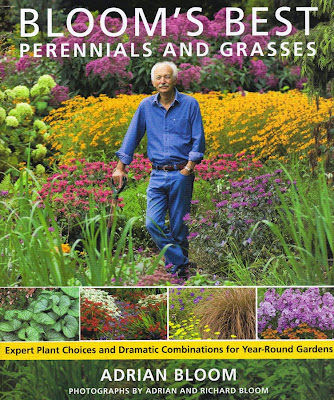
For something a little more practical for most of us, check out Bloom’s Best Perennials and Grasses. Adrian Bloom is a plantsman extraordinaire who has both the connoisseur’s eye and the ability to encourage any gardener of any expertise level. He profiles nearly 400 perennials and ornamental grasses, showing how they can be used in the landscape, and reveals his top twelve plants, most recommended for great performance in the widest range of gardening conditions.

My personal “across-the-pond” horticultural hero is the late Christopher Lloyd, an inspiration to countless gardeners around the world. In The View from Great Dixter, dozens of Lloyd’s friends, students, and colleagues, including his gardener Fergus Garrett, recount anecdotes from lessons learned during their time visiting or working at Lloyd’s family estate of Great Dixter, in southest England. They paint a loving tribute of a gardener, and a garden, the likes of which we will not soon see again. Christo, as his friends called him, had an acerbic and quick wit, and suggested a most excellent way of dealing with forgotten plant names when visiting another’s garden. “Kick it gently with your foot, and then casually ask “What are you calling this nowadays?”


Generally I flinch away from books in the “For Dummies” or “Complete Idiot’s” series, but I really like The Complete Idiot’s Guide to Year-Round Gardening. The authors don’t presume their readers are idiots, but rather fellow gardeners who just need a little extra in the way of advice and suggestions on how to engage in their favourite avocation all year long. Maybe we can’t grow vegetables outside in January in Nova Scotia, but there are certainly garden-related activities for the entire year.

I’m quite clear that I am unlikely to ever visit the Chelsea Flower Show, the epitome of garden shows held in London, England every year since 1912. But with Best Garden Design by Chris Young, any gardener can receive practical inspiration on bringing a fresh, exciting look to one’s own garden. Young presents tips from the expert designers who showcase at Chelsea, as well as case studies on particular designs showing why they work and how to achieve something similar. Nova Scotian gardeners will have to adapt somewhat for plant hardiness, but there are enough delightful variations in design, from post-modern to classical, that any reader should take away something from this book.
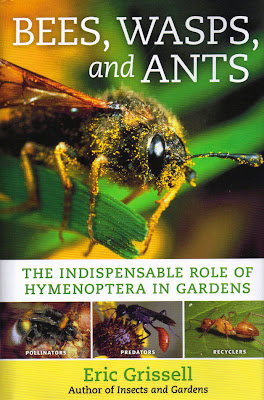

You don’t have to be an entomologist to enjoy the wonderfully readable Bees, Wasps and Ants. In fact, the author stresses that his lively volume is not a field guide for identifying these insects, of which there are an estimated mere 150,000 or so species. What he does with this volume is bring us into the world of these important insects, which are variously “cows, police, wolves, pollinators and recyclers.” Along the way, he focuses on the importance that bees, wasps and ants have for gardeners, and shows us how to make better gardeners by encouraging and embracing biodiversity rather than running for the insecticide the first time an ant marches past us on the walkway.


I'm told that I need to start promoting my own forthcoming book a little bit. So: Plants for Atlantic Gardens will be out in late February or early March of 2011. It's not in time for Christmas, but it will be in time for spring planning and pre-planting. There we go. I've done my deed for the time being. You can't get this one now, but you can get the rest of these, and any of them would be welcomed by the gardener in your life--or as a treat to yourself. Happy Christmas reading, everyone.

18 November 2010

Almost Wordless Wednesday on Thursday: Forever Autumn

My apologies for being silent the past few days. As many people know, I'm going to have a new book coming out in late winter or early spring next year through Nimbus Publishing. We're into the latter stages of editing before it goes to press, and combining that with my regular work that pays the bills...I'm a wee bit swamped. Or feeling windblown and defoliated, like this tree at my alma mater, the Nova Scotia Agricultural College. Please bear with me, and I'll be back to my normal chatty self as soon as possible, which includes visiting plenty of other blogs.

I'll leave you with a question: what sorts of topics would you like to see covered here on Bloomingwriter in the coming months? We bloggers tend to post more during the winter months when we can't do so much gardening outdoors, so we read, talk, sleep and dream about plants and gardening. I have promised some info on how to get an amaryllis to rebloom, so look for that coming up fairly soon.

14 November 2010

Plants & Pages: Gaspereau, the Giller, & Gardening.

The past few days since author Johanna Skibsrud won the Giller Prize for her novel The Sentimentalists have been somewhat surreal, at least in book-lover-land. Many of us were delighted that a young writer had been given this big boost (and large cheque), and thrilled to bits that our local artisan publisher, Gaspereau Press, had been the ones to publish her AND nominate her for this award. However, many of the so-called Toronto intelligentsia have had their knickers in a right twist because Gaspereau hasn’t had thousands of copies already printed and ready to go to the bigbox stores like Amazon and Chapters. In some cases, I think there's more than a little Green Envy going on (matching the exquisite Echinacea of the same name in the photo above).

There has been a lot of bashing of Gaspereau over this, often by people who don’t know what they’re talking about, but unfortunately also sometimes by people who ought to know better. I won’t even touch the whole judgery tempest except to say I hope the Giller committee tightens its rules about behaviour by judges prior to the winner’s announcement.

The team at the award-winning Gaspereau Press are known for their commitment to quality publishing and printing. Their books are created by hand on old-style printing presses, using beautiful papers and interesting types. I have a number of their books in my permanent library, and have read many others. This isn't a diss at other publishers--I have lots of quality books from many quality publishers. Gaspereau is just...different, in the best of ways.

Andrew and Gary can produce about 1000 copies a week of any particular book. They are working away at meeting the sudden demand, but here’s the interesting thing. Although the book hasn’t been available on Amazon, it’s been at a number of independent bookstores. Until the last day or so (I haven’t checked today), The Box of Delights in Wolfville had copies. I’ve seen Twitter comments reporting purchases at other indie bookstores around Canada. There’s also an e-copy available for purchase and download for those who use Kobo readers. (I don’t like ebook readers myself but that’s merely my personal tastes, nothing else. )

So those who are loyal to local book stores are or have been, in many cases, able to sate their desire to read this book right away. Others are content to wait, or to download an electronic copy and then buy a print copy later. The wailings about how much missed opportunity the writer is having because everyone can’t buy it Right! This! Minute! are primarily coming out of Toronto, where the street of the bank barons (Bay Street) is littered at night with homeless people sleeping on subway vents.

Regular readers of bloomingwriter can be forgiven for being puzzled about my passion, as a writer, for standing up for the publisher instead of totally saying “Oh poor thing,” to the writer, and offering hankies to the handwringers whining on the pages of the national newspapers. Well, books are an odd subject in commerce. Bookstores can order them in, and then return unsold copies to the publisher at a later date. So what happens if Gaspereau prints 50,000 copies of a book and has 30,000 copies returned to them? Can you say fiscal disaster?

Bigbox stores have a certain amount of clout, but they also can be bullies, in just this regard. To drawn an analogy between two of my passions, books and plants: I know of several nurseries in this region who had been contracted to grow certain types of plants or cut flowers for the bigbox stores. When BogBoxX store cancels its contract, or declines to renew for subsequent years, the grower is stuck with massive amounts of certain types of plants, which they can’t always market quickly in a reasonable amount of time. See nurseries exit the business. This isn’t a situation known only to my region—I imagine most parts of the US, the UK, and beyond have seen similar situations.

The bigboxes buy in bulk, and set the prices they want to pay, often less than it costs to produce a product, whether a plant or a potato or a well-printed novel. We (gardeners, readers, eaters, everyone) don’t make enough fuss about low-quality crap from China, or produce flown in from thousands of miles away and grown under questionable conditions, or plants sold here that were grown in some warm part of the US (which means they won’t thrive here), or any other number of quality-versus quality concerns. Want something ordinary, the same as thousands or millions of others have? Go to a bigbox store. Want something special, unique, wonderful and less than quotidian? Get it from a local nursery, or from a publisher with a passion for creating not just commodity, but actual heirlooms and works of art.

In Gaspereau’s case, as was noted by another writer (I can't remember who or I'd put the link up), they filled the orders to their independent customers long ago, when Amazon or Chapters didn’t perhaps bother to order any copies in the first place. Loyalty breeds loyalty. The bigboxes know nothing of loyalty, so it puzzles them when a small publisher doesn’t fawn over them and impoverish itself to meet their demands.

After a couple of days of reading obnoxious articles in the Post and Globe, people around the country began to post rebuttals and defend Gaspereau's integrity. Some writers are, like me, recognizing that it's a complex story and are hoping that all will be happy soon despite the complexities of the story. No less a sage than Rex Murphy put up an excellent article in the NaPo, including this thought:

I can hear all the objections to this perspective — it isn’t sensible, it isn’t practical, it’s so unfair to the author. In answer to the first two complaints: I say, let’s have a lot more of what isn’t sensible or practical, at least as those qualities are perceived in our fame-besotted, Jersey Shore world. The last objection, that it’s unfair to the author, is more difficult to deal with. Maybe there’s some consolation in the fact that her winning is, precisely because of this story-controversy, now quite singular, and so her book will be all the more welcomed when it does show up in the stores.

Gaspereau, after all, is merely taking a stand for the book — the book itself, as a beautiful object, as a piece of art. I would have expected, even at the higher altitudes of the Giller constituency, some fellow-feeling for that perspective and some respect for the idea that art doesn’t — necessarily — always kneel before commerce and fame.

My friend Ami McKay, a best-selling author and also a Gaspereau-published writer, wrote a post that included a letter to the Globe from another writer, which says, in part:

That Gaspereau Press has been reviled for this incredibly beautiful act of faith is a stunning collective failing of our collective imagination--but it doesn't surprise me given how debased our relationship with art has become. I do have to agree with the final sentence of today's editorial: "The true measure of any book's success is not a prize but its ability to connect with readers."

Johanna Skibsrud is going to be just fine, what with her Giller cheque, her UK agent and contract, and the thousands of copies of the book that have been and will be sold. Gaspereau has a plan to solve their publishing bottleneck which will hopefully make most everyone happy, including their bookkeeper. Andrew and Gary are to be commended for cherishing books as things of permanence and beauty, not merely tossaways to be composted along with the day’s newspaper. And for doing the very best they can for all involved. That's how they roll.

LATE BREAKING NEWS!

Gaspereau announced this morning that Douglas & McIntyre has acquired the trade paperback rights to The Sentimentalists and will be printing 30,000 copies at once. Gaspereau, meanwhile, will continue to create the handmade copies for purchase by those who desire a unique item. Group hugs for all involved (yes, including Toronto, of course). We love it when a plan comes together.

10 November 2010

Not-so-wordless Wednesday: Literary Good News in Nova Scotia.

It's been a good couple of weeks for Nova Scotian writers, although not without its controversies. However, I'm very proud of our writers and want to celebrate them, so I'm departing from my usual garden-speak (sort of) to talk about these victories.

To begin with, those in Canada who are listeners to CBC Radio know that the MotherCorp (as it's fondly referred to by some) do a yearly broadcast called Canada Reads. The normal format is for five people, usually literate and somewhat wellknown, debate the merits of five books of Canadian fiction, and each week one book gets voted off. You know, reality tv on the radio, and purporting to be literary. The show has its aggravations, not the least of which it tends to promote books already wellknown and well-bought and read. This year, the producer decided to celebrate ten years of this program, and threw open the doors to the listeners to recommend a top 40 list, which is now whittled down to top 10, and then will be top 5.

Among the top 40 finalists were three excellent works by Nova Scotian writers. One of those has now advanced to the top 10, and I'm delighted about that, but wish the other two could have also taken a rightful spot in the top ten, rather than books that have already been on Canada Reads. The top 40 finalists included:

Heave by Christy Ann Conlin. Christy Ann Conlin lives down the Valley near Berwick, and is someone I consider a dear Facebook friend; we haven't met face to face yet (we writers can be a hermit-like bunch, especially me), but we talk back and forth and share a love for books. Heave, her first novel, burst onto the scene back in 2002, so it's been some years since I read it; at the time I read it once, had mixed emotions about it, so left it lay then revisited it later and enjoyed it much more. Christy Ann has this delectable sense of snark and humour, and her portrait of a young and somewhat tormented woman growing up in Nova Scotia could be the bio of many a young woman, regardless of geography. You can see a short review of Heave here.

The Birth House by Ami McKay. This is one of my favourite novels of all time, and not just because Ami lives here in Scotts Bay, set the novel here, and is a friend. The Birth House tells the story of young Dora Rare, growing up around the turn of the century (19th to 20th) who is successor to the community's midwife and healer, Miss Babineau. I have read this novel 6 times, which is something I do only with books that imprint themselves on my heart. This is such a novel. The Birth House has advanced to the top 10 in Canada Reads, and I hope it makes it all the way, as it is a novel everyone with a love for good writing and storytelling should embrace. To tie this into regular garden-speak on Bloomingwriter, here's a post I wrote about the plants of The Birth House.

Twenty-Six by Leo McKay Jr. Leo is no relation to Ami, but they share a passion for storytelling and an ability to grip the reader with their powerful characters and storylines. Books in Canada described the writing as "tough with a layer of vulnerability", which is accurate and one of the appeals. Set against the backdrop of the explosion of the Westray Mine in Pictou county in May, 1992, an explosion that killed 26 miners but damaged infinitely more minds and spirits, Twenty-Six isn't a tearjerker or a total gloom and doom tale. It does vividly show how an event like the Westray disaster does more than take lives, yet inspires life affirmation at the same time. Leo had a clever plan for raising the popularity of Twenty-Six on Canada Reads, and it was both fun and quite successful.

Last night, the Giller prize, the wealthiest and some say the most prestigious literary prize in Canada, was awarded to The Sentimentalists, by Johanna Skibsrud, who grew up in Nova Scotia although she now lives in Montreal. The Sentimentalists was published right here in Kings County by Gaspereau Press, a small company dedicated to quality literary printing and publishing. Their books are works of visual art to hold and touch as well as to read.

I wrote a review of The Sentimentalists a few months ago for the provincial newspaper. I reread it this morning and stand by what I wrote back then. It wasn't my favourite book ever, but I do look forward to more by Skibsrud because she does have a powerful command of language. Here's what I wrote back in the late winter:

The Sentimentalists by Johanna Skibsrud. Gaspereau Press, 2009, 27.95

Reading a book in preparation for reviewing it can sometimes be compared to making bread. Once the sponge has been kneaded, the bread is left to “rest” for a period of time before it is completed. When I finished reading The Sentimentalists, Johanna Skibsrud’s first novel, I initially was at a loss regarding how to review it, so left it alone for over a week before revisiting it.

The novel’s premise seems straightforward. The narrator’s father, a US Army veteran with the somewhat incongruous name of Napoleon, is declining in health, which coincides with an implosion in her own life. She moves him from his “palace,” a trailer in Fargo, North Dakota, to share a house in a lakeside town with Henry, the son of Napoleon’s friend Owen, who was killed in action during the chaos that was the Vietnam War.

The town, Casablanca, is a replacement for a town that was flooded to make way for a dam and that still remains beneath the lake, deeply submerged and viewed only through memory. In much the same way, personalities, emotions and stories of the main characters are only seen murkily, as if peered at through waters churned up by currents or storms. Gradually we see more of the characters and discover the haunting story that so affected Napoleon and coloured his whole life.

Skibsrud has said in interviews that the story evolved from conversations with her father, a Vietnam veteran, a year or so after the invasion of Iraq began following the events of September 11, 2001. During that earlier war, her father, then a young soldier, had witnessed the murder of a civilian woman by an army officer. He was so outraged by this event that he spoke out to his superiors, which resulted in an inquiry being held. Although the novel is inspired by this facet of Skibsrud’s family history, she stresses it is a work of fiction.

“‘Remember me when I am dead, and simplify me when I’m dead,’” Napoleon says, quoting a well-known verse by the British soldier-poet Keith Douglas, who was killed in the Normandy invasion of June 1944. Napoleon and his daughter agree that these are the words of “a rank sentimentalist” but also, the narrator writes, “like maybe everything was not such a big mystery after all.”

Before writing The Sentimentalists, Skibsrud authored of a book of poetry, Late Nights with Wild Cowboys, and her skill with word pictures shows nicely in some of the passages. However, at times the novel suffers from a lack of firmer editing. Long, meandering sentences might work well in presenting ephemeral thoughts and ideas in poetry. In this novel they’re used to such an extent that too often they serve to distract and even annoy the reader.

Gaspereau Press is well known for publishing books using quality paper and distinctive covers, creating books that are as much a pleasure to hold, as they are to read. It always puzzles me, however, that this press and others will often include long screeds at the end of a book about the typeface in which the book is set, yet say little or nothing about the artwork used in creating the cover. I particularly like the cover of The Sentimentalists, with its khaki-green illustration of a soldier sliding sideways off into the jacket flap and echoing on the back, much as the events of Napoleon’s life “have been…somewhat sideways to himself.”

As a bildungsroman, or coming-of-age novel, The Sentimentalists succeeds nicely in presenting a journey of growth and possible enlightenment in its narrator character. Where it falters a little, however, is in taking too twisted a road on the voyage in which to tell its tale. That criticism aside, it will be interesting to see what direction Skibsrud’s work takes in the future.


Small publishers/printers like Gaspereau are faced with a real dilemma when a book is nominated for awards like the Giller. Do they print a huge number of copies to go out to bookstores across the country and then have a significant portion returned to them once the glare of the publicity is off them? Or do they hold back on printing more copies until they see what will happen with the award?

Given that the paper used in the book is a particular high quality weight and variety, they have to order it in and it's not cheap nor easy to source in large quantities. Andrew Steeves, the publisher of Gaspereau (shown here on the left with his business partner Gary Dunfield (right), who keeps everything physically running smoothly at the publishing house) writes about their quandaries on their blog, which I hope you'll visit.

All in all, a great couple of weeks for Nova Scotia's literary community, and for lovers of literature everywhere, regardless of where you live. Huge and heartfelt congratulations to all involved!!

21 October 2010

Punting garden gnomes & other true-ish tales: How to Survive a Garden Gnome Attack


The following is a true story.
I dislike garden gnomes immensely. I don't know if I suffered trauma as a child by having one fall on my foot, or if I was stalked by one as a college student studying horticulture, or what the rationale might be. All I know is that I've never seen the appeal of them, and that one on television flogging some travel site makes me want to punch the television. There were never any gnomes in my family's gardens, and suffice it to say there have never been, nor will there ever be, any in mine.

A few years ago, I was on a plant hunting expedition in Labrador, which is the northern part of Newfoundland, the part stuck to the rest of North America. Through some sort of series of errors, the place where we were all staying was overbooked, and I was the (not) lucky one who got to stay somewhere else...which was at the worst B & B I have ever encountered. Between the musty bed and bedclothes, the religious homilies festooning every wall, counter, and other surface, and the shower/bath with no mat and the world's slipperiest tub (I still bear the scar on my shin), it was, quite frankly, the night from hell. About 4 am, I gave up trying to sleep in the musty, too-hot room, packed up my suitcase, and left, planning to sleep in my car the rest of the night. I'd already paid for the night, lest anyone think I skipped out. I wouldn't do that, no matter how peeved I was.

But out by the parking area, there were two stupid, tacky, cement gnomes, sitting there in their very gnomeness. In the dark, I encountered one by banging into it with my sandal-clad foot. This just increased my irritation. Both gnomes were then gnocked over. It might have been the wind.

At least I didn't do what one of my friends said I should have done, the next morning after having breakfast with the rest of them. His idea was that I should have kidgnapped one of the gnomes and taken it to Gros Morne, placed it on the summit of the mountain. Gno, thank you. I would never pollute Gros Morne in such a way. There's rules against degradation of nature, you know.

All this is by way of prefacing my review of Chuck Sambuchino's new book, "How to Survive a Garden Gnome Attack." It was sent to me several weeks ago by Ten Speed Press, and I just got around to reading it this week.


I had long suspected that gnomes were an evil lot, bent on world domination. It's as plain as the gnose on your face that they're also in cahoots with the evil goutweed, which grows just the right height for gninja gnomes to hide in. Can you see the evil little devil hiding in this patch of goutweed? GNo? Works well, doesn't it?

Okay, the book. It's hilarious and creepy, all at the same time. It depends on your sense of humour, (or in some cases, lack thereof). Sambuchino writes well, and while the tone is deeply serious to reflect the danger lurking in lawn warriors, the reader can't help but hope that the author didn't bite his tongue too often whilst writing, as it was firmly planted in his cheek.

Do YOU know how to gnomeproof your yard and garden? Do you know how to secure your home so that these little monsters can't get inside for an attack? Sambuchino leads us through everything you need to know about coping with these insidious, nefarious creatures. You can survive when they attack, and Sambuchino proves how they inevitably will get cocky enough to make an attempt on your life. Fortunately, he's the man with the answers, though I was expecting some reference to duct tape and plastic sheeting in there, too.

A mention of the Battle of Thermopylae should give the history buff amongst readers some understanding of how to oppose gnomes in battle. There's even some recommendation about how to dispose of the dangers of "roaming gnomes." My personal favourite is to dispose of said creatures in the Laurentian Abyss, one of the deepest parts of the Atlantic Ocean, but in case of emergency, probably leaving a gnome at the door of any mall on Black Friday will do the trick.

Now, let me stress, this isn't high-faluting "Litter-a-chur", nor is it an essential for the gardener's library in order to increase one's gardening abilities. What it is, is very good fun, a nice addition as part of a gift basket or as stocking stuffer for a gardener or for anyone who has ever muttered about the clutter of gnickgnacks on lawns and in homes. We all need a little more humour in our lives.

And far, far, fewer gnomes.

20 October 2010

Viburnums for Autumn Brilliance


Autumn is a season that many of us view with a mixture of joy and dread. The rainbow of foliage colours is usually particularly satisfying at this season of fading flowers and shortened days, and among the deciduous allstars of fall colour are the Viburnums.

Many of us think automatically of the snowball bush (V. opulus) when viburnums are mentioned, to which I go ick,pooh, yuk! I’m not crazy about this species because it’s very prone to attack from pests, and I don’t find the plant all that interesting. But that’s a personal taste—and what in gardening isn’t personal?
For our garden, I initially tended toward native species because birds love them so much and I was sure of their hardiness in my yard. In the past few years, emboldened by success with a doublefile and a fragrant species, I'm intent on adding others to the mix around our property.


Viburnums come in a dizzying number of species and cultivars, and I don’t profess to be an expert where they are concerned—just that I love them, which is a good start. You do have to watch the hardiness zones, as some are very frost tender here and aren't suited for the colder areas of the province. But we have plenty of choices for our gardens.
There are two of the more ornamental (i.e. commercially easily found) viburnums I couldn’t be without: the doublefile viburnum, (photo above) with its pagoda-like structure and lacey white flowers. There are several different cultivars available--I've pretty much decided mine is 'Summer Snowflake' rather than 'Mariesii'.

Since the only thing better than one doublefile viburnum is two, I've pretty much decided that next year, I'll add 'Newport' doublefile to the back garden too. I saw it showing off its fall colour at a friend's recently, and that was enough for me.

I love the fragrant viburnums, and have a hybrid Carlecephalum near my office window, where its fragrance can lull me in late spring and early summer. The fun thing with these shrubs is that you can tell this autumn what next year's bloom will be like, because the flower buds are large and obvious now. It's been so windy the past few days, I haven't gone out to take photos, however, so you'll have to take my word for it for now.

I really like V. 'Onondaga' which has great burgundy bronze colour in its new spring growth, and in its flower buds too. It has lobed leaves something like a highbush cranberry, and also has flowers somewhat similar to the doublefile or highbush cranberry viburnums, flat clusters of lacy white blooms.

Some years, we don’t get a huge amount of fall colour from our viburnums, mostly because that ever-present wind rips leaves from many of our shrubs and trees before they can get really going. However, where we lose the foliage show sometimes, the fruit of the shrubs remains colourful, and provides much-needed food for birds, which are a major part of our garden.

V. nudum var. cassinoides is the Witherod or wild raisin (photo above), a native shrub that has reddish foliage in spring and gorgeous red to purple fall foliage. White flowers in the spring give way to pink fruits that eventually turn deep rich blue, before the birds swoop in to dine on them all. It was one of the first shrubs I learned to recognize as a child, although I thought the berries were toxic, probably because they are almost the same shade of blue as Clintonia.

Viburnum dentatum or arrowwood (photo at top of post) is a tough, winter hardy species that works well as a tall hedging or screen plant for a windbreak as well as having ornamental qualities. Its common name comes from the fact that its straight stems were formerly used by First Nation peoples for the shafts of their arrows. Arrowwood has blue-black fruits in the fall and foliage that varies from yellow to coppery orange and red. 'Chicago Luster' and 'Blue Muffin' are two popular cultivars of this native shrub.
V. trilobum, the highbush cranberry, is not a cranberry at all but is a native shrub in much of Atlantic Canada. It’s attractive as a specimen plant or even as a hedge, and its white blossoms are followed by blood red, fleshy fruit and red-purple autumn colour. Although the species grows to twelve feet tall, the cultivar ‘Compactum’ reaches only half that height.

If you're looking for an excellent book on the wonderful Viburnums, do check out Michael Dirr's excellent reference book by the same name. Published by Timber Press (of course), it's an invaluable reference book, written in Dirr's wonderfully encouraging and chatty style, and illustrated numerous photographs as well as with paintings done by his wife. Just be aware--viburnums can be habit forming.
Have you been lured into the wonderful world of viburnums yet?

02 September 2010

Virtual Book Tour: Hothouse Flower & the Nine Plants of Desire


A few weeks back, I was contacted by a publicist who wondered if I was interested in participating in what is called a Virtual Book Tour, in which a number of us would read and review a particular novel. Based on the blurb about the novel, I agreed to do so, and read Margot Berwin's Hothouse Flower and the Nine Plants of Desire.

In my real life as a freelance journalist, I write for a variety of publications and clients, and about a number of different subjects. Despite the fact that it’s time-consuming and doesn’t pay well, I regularly review books for the provincial newspaper, occasionally for other publications, and occasionally put up a review here on bloomingwriter. Normally, I review books of nonfiction in my areas of interest: gardening, nature, science/environment, occasionally history; occasionally I review a work of fiction. I have interviewed numerous authors, including Canadian icons Margaret Atwood and David Adams Richards, (two of my favourite authors) and have long taken my philosophy of book reviewing from something Ms. Atwood wrote some years ago.

“I still won’t review a book I don’t like, although to do so would doubtless be amusing for the Ms. Hyde side of me and entertaining for the more malicious class of reader,” Ms. Atwood wrote in the introduction to her essay collection, Moving Targets: Writing with Intent, 1982-2004. She goes on to say that if a book is really bad, it ought not be reviewed at all, or if it’s good but not to her taste, someone else should review it.

This isn’t a bad book, but it’s not a particularly good one. I will stress that it’s mostly not to my taste, which runs the gamut from science fiction to thrillers to hardcore literature, so maybe I'm just being a grump. However though not entranced by it, I see some flashes of delightful ability in the author, enough that I will be quite willing to read a future work by Berwin even though I won’t re-read this particular one.

If you’ve been following the virtual book tour set up for Hothouse Flower, you may have already read the book, or at least know its premise: Lila, the narrator/lead character is newly divorced, lives in New York City, works a sort of dull job in an ad agency, has a bright but dull apartment. She has no commitments—no relationship, no pets, no plants, no real life outside of her McJob—until she buys a tropical plant from a smooth-talking street vendor. She then meets an odd but somewhat intriguing man who has a Laundromat filled with exotic and wonderful plants, and through her own errors in judgment, she causes this man to lose his plants. Her ensuing quest to replace his plant collection leads her to the rainforests of Mexico’s Yucatan peninsula.

The premise is intriguing, and the book blurb sounded promising. And while Berwin writes quite well at times and has a quirkily fun sense of humour, her characters simply don’t work for me. My amusement at some of the dialogue, events and descriptions in the book was completely overshadowed by the characters, none of whom make me care about them even a little bit, and several of whom are reprehensible for no apparent reason related to the storyline. When the little bits profiling each of the plants at the beginning of chapters are the most entertaining parts of the novel, there’s a problem with the work.

At times, there’s a bit of a magic realism feel to events in Hothouse Flower. But unlike Gabriel Garcia Marquez with his One Hundred Years of Solitude or Jack Hodgins’ brilliant romp The Invention of the World, there’s not enough mystery between the covers of Berwin’s novel to make me really wonder about the odd things that do take place here and there. Rather than be fetchingly mysterious and ineffable, they come across as jarringly annoying and contrived, as if the author was trying overly hard to be clever.

Normally, when reviewing a book I avoid any reviews done by others, lest my opinion be in some way coloured by the comments of more learned heads than mine. Because I was completely unfamiliar with Berwin prior to reading Hothouse Flower, I did seek out more information about her. She has said that while this is her first published novel, it’s her third work, and does draw on some aspects of her own experience. Although it spans mere months as opposed to years, Hothouse Flower could be considered a bildungsroman, a coming-of-age novel of self-development, by an author still fledging her wings. With this in mind, I do genuinely look forward to reading future work by Berwin when she has had a few more years of honing her skills.

17 January 2010

Blast from the (Bloomingwriter Past): Herbal medicine-A peek into Miss Babineau’s garden


Back in 2006, my dear friend and neighbour Ami McKay wrote an amazing, and bestselling, novel, The Birth House, which caught the public's imagination here in Canada, in the US, Britain, and other parts of the world. Set right here in Scotts Bay at the turn of the 20th century, it was translated into at least two other languages and bumped The DaVinci Code out of the #1 spot on the Globe & Mail's bestseller list. It was (and is still) an amazing, enthralling, riveting read, and I was thrilled to watch Ami's success. She's currently in the editing/revising phase for her second novel, for which we're all anxiously awaiting. (no pressure, Ami, really...).

In the summer of 2006, Ami asked if I'd take part in a blog tour that she was hosting. As the goofy garden writer who lives up the hill from her, I thought it would be a great idea to write a bit about the herbs and other plants that would have been used by the community midwife, who in The Birth House is named Marie Babineau. So here, for your Sunday morning reading pleasure, is that post, with the addition of a few photographs (back then we had no highspeed up here in Scotts Bay) The book is still very much available, and I still utterly recommend it: it is one of my favourite novels of all time.


The Acadians who came to what is today Nova Scotia in the years between 1604-1755 brought many of their own plants with them to develop their potager gardens for medicinal, food and other useful plants. These kitchen gardens were usually very precisely laid out in geometric shapes, but include attractive ornamental plants as well as utilitarian species. There are wonderful examples of Acadian potagers at Grand Pre National Historic Site , Annapolis Royal Historic Gardens , and at the Acadian Museum of Southwest Pubnico .

Being of good Acadian stock, Miss Babineau would have grown traditional vegetables including string beans and peas, onions, and root vegetables such as sunroot (Jerusalem artichoke), beets, turnips, carrots and radish. There would be raspberries, gooseberries and currants for drying and making into preserves, and a host of herbs for tending the community’s ailments—wormwood, lovage, sage, lavender, chamomile, catnip, calendula, angelica and dill…Some plants she would have foraged for in the woods and meadows and along the seashores and roadsides; blackberries, chokecherries, sumac, spruce gum, willow and more.

Here’s a panier-basket of plants, a few of them cultivated and but most gleaned from mother Nature’s bounty.

Angelica: Marian Zinck in the lovely book Wildflowers of Nova Scotia, New Brunswick and Prince Edward Island (published by Formac, newly revised and updated in 2006) writes that chewing the root of angelica was formerly thought to ward off witches. More practically, angelica is often candied or made into a cordial.

Red Clover: a lovely plant for hay and to attract bees, it also makes a wonderful tea when the flowers are dried.

Bunchberry: (Cornus canadensis) Also called crackerberry, these attractive wild perennials produce orange-red berries, bland unless cooked.

Curled Dock (Rumex crispus): The root of this often weedy plant have been used to treat skin afflictions

Winterberry (Gaultheria procumbens): both the leaves and brilliant red berries of winterberry taste of wintergreen and are very tasty.

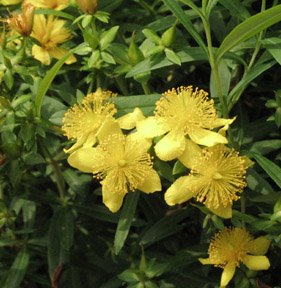
St. John’s Wort (Hypericum punctatum): Once thought to suppress urine output and relieve kidney and bladder problems when made into a tea. Also formerly used as an ointment to ‘dispel hard tumours, caked breasts, bruises, etc.’ Now known to be effective in treating depression and sleep disorders.

Dandelion: Never shun the humble dandelion, also called pissenlit or pissabeds, perhaps for their brilliant yellow colour or for their usefulness as a diuretic. The leaves are a good potherb, the roots roasted and ground are used as a coffee substitute, and of course the flowers make the heady and potent dandelion wine.

Wild roses (Rosa virginiana, R. carolina and others): The ripened fruit, or hips, of wild roses contain much vitamin C and are delicious in jellies, salads or teas.

Dogwood (Cornus alternifolia): the bark of this and other dogwoods was traditionally used by both French and First Nations peoples, mixed with tobacco for lessening that herb’s strength when smoked.

Hawthorns (Crataegus, various species): The small fruits of hawthorns, often referred to as wild medlars (including by Lescarbot at Port Royal in 1609) though sometimes not very flavourful, were known to be of use against scurvy, but also supposedly good to prevent the menses and other ‘fluxes of bloud’ as well as for bladder ailments.

Service Berry, Chuckly Pear (Amelanchier, especially A. canadensis): This large shrub or small tree produces juicy, pear-like fruits about the size of large blueberries, luscious in taste and formerly much used in making preserves, cordials and even a delightful liqueur not unlike cassis.

Mint (Mentha, various species): Mints have long been used in soothing teas as well as in flavouring cooking, bringing ease to a distressed stomach and relief to cough and cold, itching of the skin and various other malaises.

Coltsfoot (Tussilago farfara): Firstflower of spring, its bright yellow, dandelion-like blossoms appear before the thick shiny leaves, which are boiled to make very effective cough syrups and lozenges.


Labrador tea: (Ledum groenlandicum) Although the leaves are bitter, they are often used to make a soothing tea to releeve colds, coughs, and other ailments. Literature reports that a tincture of the plant was useful in relieving the sting of insects, as well as comforting those with rheumatism. Interestingly, the plant has also been used to dye material a brown colour!

Wild cranberry (Vaccinium oxycoccus, V. macrocarpon): One of the most useful wild fruit for preventing or treating scurvy, they were called Atoca by the first Nations peoples who introduced them to the French explorers and settlers.

Cattail: (Typha angustifolia, T. latifolia) An all-purpose and valuable plant, the pollen of which has been used as a flour substitute; the roots are edible, high in starch and sugars and useful in a syrup for fevers, as a poultice on sores and scalds. The fibre has been used in past years to make a type of burlap while the fluff of the flowerheads was often used as a kind of insulation.


Valerian: One of the herbs Miss B’s ancestors would have brought with them from France, and now widely naturalized, it is useful in promoting sleep and in calming nervous conditions. (Funny that Dr. Thomas didn’t use it in conjunction with his recommended vibrator treatments!) Note: The previous aside is an inside joke and you'll just have to read the book in order to appreciate the humour in it.

Willow (Salix species): Willows are the natural source of acetylsalicylic acid, the foundation of painkillers such as aspirin. Chewing the leaves or bark would relieve symptoms of arthritis and other painful conditions.


Glasswort, samphire greens: (Salicornia maritima) This succulent little plant grows on saltmarshes, and is quite edible, but the interesting thing about it is that when burned, its ashes can be used in the soapmaking process. Acadians on the French shore of New Brunswick refer to the plant as titis de souris, or mousetits! (illustration from Wikimedia Commons, as I don't have a good photo of this plant.)
Post written by jodi (bloomingwriter)

Search Bloomingwriter

Custom Search